Brand and Capture

Current Articles | RSS Feed RSS Feed

The Advantages Inbound Marketing Pros Bring to the Table


Depending on your Internet experience and social media comfort level, inbound marketing either seems impossibly complex or ridiculously easy. The truth doesn't reside at either end of the spectrum but somewhere in between.

If your business marketing campaign is still focused on outbound marketing strategies such as trade shows, email blasts, cold calls and telemarketing, it can be more than a little disconcerting to jump into the free-wheeling, paperless, high-speed world of social media where instant gratification seems to reign.

On the other hand, if you've embraced social media in your personal life, spend hours updating your Facebook page and posting messages to your friends, and are a dedicated tweeter, you may fail to recognize the distinct differences between personal and business use of social media and the need for a certain amount of careful restraint in business applications.

kuno creative is a certified hubspot partnerIn both cases, your company's marketing campaign will benefit from development and hands-on management by an experienced inbound marketing professional. Among the distinct advantages inbound marketing experts bring to the table is the expertise to build a platform of individually tailored social media products and measurement analytics to power your company's specific needs and target both broad and narrow goals.

The speed and targeting accuracy made possible by computerization and Internet dispersal allow inbound marketing strategies to be quickly and continuously tweaked by knowledgeable professionals. Computer analytics provide immediate, measurable results that quickly reveal the effectiveness of individual inbound marketing strategies. Inbound marketing experts use carefully selected analytics to continuously monitor and tweak marketing programs to ensure that they quickly produce the desired marketing results. Constant evaluation ensures that your marketing program reacts to and gains the greatest benefit from consumer response, market forces and changing demographics.

The wide variety of inbound marketing products and platforms allows businesses to capitalize on broad spectrum dispersal of their marketing message with one media while targeting very specific consumer demographics with another. Successful inbound marketing campaigns generally employ diverse techniques to approach company goals from several angles to maximize success. To the uninitiated, inbound marketing attack plans can appear to be random and fragmented. Indeed, it is manipulation by skilled inbound marketing professionals that produces a cohesive campaign.

Contact us for a free inbound marketing consultation.


Using Twitter for Inbound Marketing and Customer Service


When actor Ashton Kutcher gained his 1 millionth Twitter follower, the quasi-event made nightly newscasts and Internet news feeds. Of course, that's old news. Kutcher is now battling pop singer Britney Spears for Twitter supremacy; both are nearing 5 million followers. You don't have to be among the Twitteratti elite to see Twitter's marketing potential.

twitter is a great social media tool for inbound marketing and customer serviceThe ultimate news feed, Twitter is one of the newer additions to comprehensive social media marketing strategies. With more than 20 million U.S. users, Twitter has the potential to expand your marketing reach exponentially. Twitter allows you to connect almost instantly with customers, as long as you limit your messages to 140 characters, or about two short sentences. Obviously, Twitter isn't a vehicle for providing in-depth information or cultivating deep customer relationships. It's more "Hi" at the coffee shop than weekend seminar. But don't underestimate Twitter just because customer contacts seem superficial. There's something about the constant accessibility, immediacy and repeated contact that appeals to consumers.

Twitter can be an effective marketing tool when used correctly. It has no peer when it comes to quickly disseminating timely snippets of information, making instantaneous announcements to large numbers of people, reaching people scattered in distant locations and obtaining instant feedback. Some of the most effective marketing uses of Twitter include:

  • Broadcasting news such as the launch of a new product or an early weather-induced closing.
  • Promote an event. Twitter allows you to easily issue repeat announcements to promote special events.
  • Announcing special sales. Offering occasional Twitter-only unadvertised sales is one effective way to keep fans tuned in.
  • Answer customers' questions. Personally responding to customers' questions or complaints builds goodwill and strengthens customer loyalty.
  • Point out useful resources. Providing helpful links to web articles, websites or blogs increases your credibility as an industry expert.
  • Obtain feedback. On Twitter you can run a poll, ask a question or ask for advice and receive valuable feedback from customers instantly.
  • Introduce new staff or announce a job opening. Who better to become your next devoted employee than a loyal customer who is already emotionally invested in your business?
  • Promote your brand. With each tweet you send, you increase consumer awareness of your company and products, and keep your brand firmly in front of consumers.
What are your experiences using Twitter for marketing and/or customer service?

Photo Credit: Metro Library and Archive

The Truth About Inbound Marketing vs Outbound Marketing


It's popular these days to be a thought extremist. You're either on one side or the other. Everything is either black or white. There is no gray. In marketing, you're either into inbound marketing via the Web or you're a traditional PR and advertising fan. Truth is, nobody is right when we're talking about extremes. The truth always lies somewhere in the middle.

What's the argument about?

  • blended inbound and outbound marketingInbound Marketers say that consumers have changed and are no longer willing to accept e-mail blasts and TV ads and any other sort of "push" marketing. The only way to market is by publishing interesting content and building communities online.
  • Traditional Marketers agree that things have changed, but there is still plenty of room for advertising and reaching out to prospective markets via e-mail, TV and radio. They're not against Internet marketing, just the idea that you can never cold call or blast an offer out to millions.

Who's right?

They're both right and here are some key reasons:

  1. While it's trendy to focus on blogging and social media, webinars and videos, marketing companies are still channeling a large proportion of their clients' budgets into traditional media marketing.
  2. There are true synergies to blending inbound and outbound marketing. An example would be a company rolling out a new product and desiring to make a big splash in a short period of time. In this case it makes perfect sense to build a groundswell of brand awareness by establishing social media communities and attracting members via conventional advertising as well as PPC, e-mail marketing, radio, TV, etc. Whatever the budget allows and based on historical click-through rates.
  3. While it's true that inbound marketing can be a highly successful strategy for improving lead conversion, unless you already have a well-known brand, it can take many months to build up a loyal following. Again, blending targeted outbound marketing into social media marketing campaigns can accelerate awareness and growth.
  4. Finally, to think that one size fits all marketing strategies is foolish. Every organization has different marketing needs, and successful companies are quick to adapt to new market conditions. The best overall strategy is one that is flexible enough to consider all kinds of marketing and apply the most appropriate mix for the goals of a campaign.

Are you a marketing extremist, or a chef creating tasty campaigns from a variety of ingredients?

Photo credit:


Looking to improve your marketing campaigns and branding? New ideas.


It’s a lot like writer’s block.  Your company provides a needed product or service, your team is sharp and motivated, but you’ve hit a wall.  It’s a frustrating time, but there are a few simple steps you can take to begin regaining your marketing edge and finding new ideas. 
 
Brand Marketing New IdeaGet Inspired
. Do some exploring.  Find examples of logos, graphics or design and how they are executed in marketing materials.  These don’t necessarily have to be from your own industry.  In fact, characteristics of effective branding from other industries might be exactly what’s missing in your own. 
 
Reevaluate your message.  Brand marketing agencies can be particularly helpful in this arena since you might not have drilled down to your core brand proposition until you begin designing your brochure or mailer.  Experienced branding agencies can also serve as a sounding board or test market for your new ideas. 
 
Show Your Relevance. 
Has your reason for reaching out to your audience always been clear and relevant?  “To get new business” is not a reason for you to reach out any more than “To provide someone with business” is a reason for someone to read your brochure.  Specificity and relevance then will be key. 
 
Show why you’re different from other campaigns or companies.  Then determine why your target audience is interested in what you have to say.  If necessary, send out preliminary feelers or surveys to satisfied clients to determine where interests and needs lie.  Brand marketing agencies can provide these services for you, as well as more involved market research such as paneling. 
 
Expect Effective Multimedia from Branding Agencies. 
Remember that some people are more visual learners, while others need words to understand you.  Strong brand marketing agencies understand the different ways that people learn and retain information.  Using a well-thought-out combination of communication forms will help you to reach as many potential audiences as possible.  
 
While the latest media or technological trend is a tempting lure for branding agencies and clients alike, multimedia shouldn’t be utilized for its own sake.  Graphic design, animation, sound and other communication forms should reinforce the core message—your core message—rather than distract from it. 
 
Any one of these steps has the potential to open up a whole new set of possibilities for your brand, your marketing and your company.  They can help you break through the wall. 


Lead Nurturing as Part of an Integrated Marketing Campaign


There's an interesting debate going on in LinkedIn Answers about the positioning of various lead nurturing software solutions. The marketing automation market leaders face off with each other in an unusual display of bravado. Let's try to boil this down to the primary issues and see how the players compare.

lead nurturing with hubspotFirst let's define lead nurturing in the context of a marketing campaign. Lead generation is the process of attracting people to your venue (in the case of internet marketing, we're talking about your website) and convincing them to sign up for something, i.e. capture their contact information. Lead nurturing is what happens after that, the steps you go through to improve your lead's interest in your products and services and ultimately commit to a sale. More loosely defined, lead nurturing is an early form of customer relationship management (CRM), where you work on relationship-building and maintain constant contact with your customers to enhance retention and inside sales.

So the debate is about marketing automation, using software to make the process of lead generation, lead nurturing and CRM as easy and productive as possible. Here's a breakdown of the players and their solutions (this is not an exhaustive list, just the players in the LinkedIn debate):

  1. Eloqua - an integrated marketing automation platform featuring lead generation, contact management, e-mail marketing, website forms and landing pages, event management, lead nurturing, crm integration and marketing analytics.
  2. Marketo - a b2b marketing platform featuring lead generation, e-mail marketing, contact management, lead nurturing, lead scoring, crm integration and marketing analytics.
  3. HubSpot - an inbound marketing platform featuring a website cms, blogging, landing page creation, keyword analysis, on-page seo, social media promotion, inbound link analysis, competitive seo analysis, lead tracking, lead nurturing, marketing analytics and crm integration.

As you can see, Eloqua and Marketo offer similar solutions, focusing primarily on e-mail marketing for lead generation and lead nurturing. HubSpot, on the other hand, offers a complete solution for content marketing, social media marketing, seo, lead tracking and nurturing and marketing analytics. The Eloqua CTO and Marketo VP argue that their solutions offer more in-depth lead nurturing, scoring and deeper analysis of leads than does HubSpot. HubSpot's lead nurturing is new and has not been market-tested as long as either Eloqua and Marketo. Clearly Eloqua and Marketo offer more tools for lead nurturing, but my concern is their lead generation strategy. While e-mail marketing has a place in any internet marketing campaign, I believe that inbound marketing is a better strategy for getting found online and capturing leads.

In the interest of fairness and transparency, we have already chosen HubSpot as our inbound marketing solution, and we are a Certified HubSpot Partner. We have no experience with either Eloqua or Marketo, so it's up to you to investigate the benefits of these HubSpot competitors. We chose HubSpot because it is as close to a complete Internet marketing solution as you can find on the market.

The tip of the HubSpot spear is inbound marketing - creating great content, social media marketing and lead capture using calls-to-action and landing pages. Lead nurturing, closed-loop marketing (crm integration) and marketing analytics then allow you to take your lead generation success and optimize conversions to sales. For us and for our clients, there's a tremendous benefit to combining all of these disciplines in one coherent and easy-to-use platform. With such a platform, sales and marketing people can actually use the software to achieve maximum results without intensive training or technical support. If anyone else does all this, please let me know.


Social Media - New iPod Nano w/video: so much for the Flip!


iPod Nano w/videoWhile I was writing about the merits of a Flip pocket camcorder for social media and Inbound Marketing audience engagement yesterday, Apple announced that the new iPod Nano’s, that were rumored to include cameras, actually have video!

Like most, it was love at first use with my Flip Mino.  Now, I might as well sell it on eBay, since I won’t need it anymore with the new multi-tasking iPod Nano.  Aside from the music player and various useful apps such as a built-in pedometer and FM tuner, let’s compare the video features according to the product websites:

  iPod Nano (16G)  Flip Mino (2G)
 Price   $199.99     $149.99
 Size  3.6” x 1.5” x 0.24”  3.94" x 1.97" x 0.63"
 Weight 1.28 ounces  3.3 ounces
 Video Size  640 x 480 pixels 640 x 480 pixels
 Video Playback Up to 5 hours Up to 4 hours
 Display 2.2 in. diagonal 1.5 in. diagonal
 Video Capacity Up to 16 hours 1 hour
 Orientation Portrait or landscape Landscape only 


 

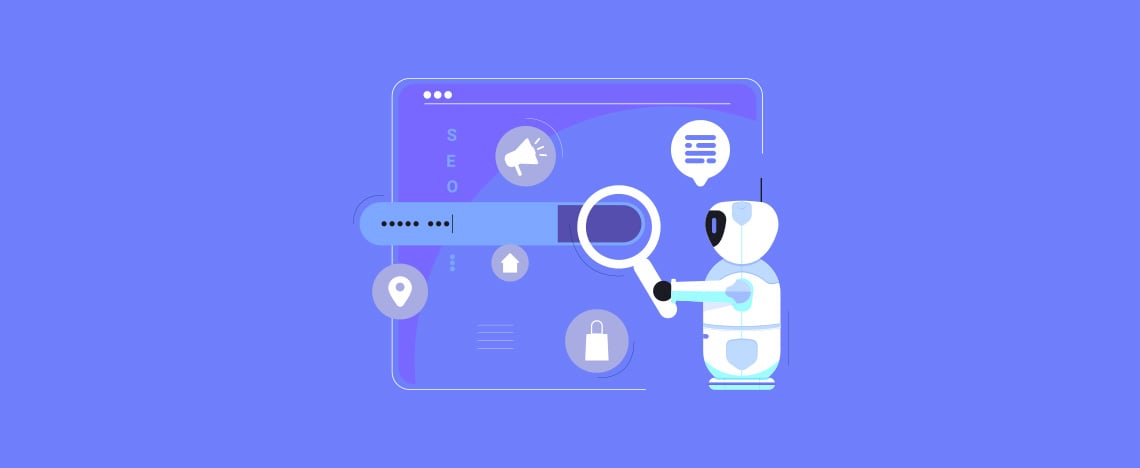
Q: Why would a business or organization need a pocket camcorder, anyway?  
A: To give your customers/supporters quality content that they can not only read, but can view.
1. Record a quick quote or testimonial from a client for dictation later
2. Capture video for blogs, news articles, product demonstrations for web
3. Improve recording spontaneity with the small size and multi-functional portability
4. Record something that you would like to further explore at a later time
5. Use as a crisis management PR tool for quick communication to the media

Another myth was that the iPod Nano would be discontinued, with the popularity of the iPod Touch, and the iPod functionality that comes along with iPhones.  But there are still a lot of us that appreciate the good old-fashioned click-wheel on the running trail.  The newer iPod's have “shake” technology, but if you leave it enabled while working out, the song changes every time your feet hit the ground.

The only thing more exciting will be the inevitable future development of iPhones with phone, camera, video, and iPod all in one.  However, raising the bar on the amount of grief you will experience if you lose or damage your “phone".


Blending Brand Marketing and Inbound Marketing


Inbound marketing is rapidly gaining popularity as a relatively inexpensive means to improve lead conversion rates and increase sales. Faced with marketing budget decisions for next year, many business owners wonder whether or not to completely replace traditional brand marketing methods with blogs, social media and search engine optimization. In many cases it makes sense to blend inbound and outbound marketing, when the strengths of one support the weaknesses of the other. Here are some examples.

Example 1 – Entering a New Market

blending inbound marketing with advertising and marketingLet’s say you’ve recently committed to an inbound marketing campaign with the business goal of improving web traffic by 200% and sales by 20%. You’re focusing your campaign on several counties, some of which are suburban, while others are more rural. The question is how will local residents find your blog and social media presence in the first place? Currently, if people search for local businesses in your market, your site isn’t listed. That’s one of the objectives of the inbound marketing campaign. How do you get them to follow you on Twitter and Facebook if they can’t find your site? Try some good old-fashioned brand marketing. Place some attractive billboards around the counties at key intersections announcing a promotional offer and direct people to a well-designed landing page to capture leads and announce your blogs and social networking venues. Try a short radio spot with the same pitch. E-mail your announcement to your current contact list and let them know about your new site, blog and community spirit.

Example 2 – Rolling Out a New Product or Service

Advertising is still one of the best ways to get peoples’ attention. Over time consumers grow weary of the same old intrusive ads blanketing the media, but for a quick impact to draw attention to a new product or service, there’s nothing like it. Get the buzz started with some clever “coming soon” ads to whet viewers’ appetites. If possible, target a special date that doesn’t conflict with some other popular event. Give people sneak previews via your web site, blog and social media – but don’t forget to capture your leads via landing pages! When the roll-out date arrives, throw a party of some kind, online or at a public place. Offer special promotions and prizes. Get them enrolled in your community sites and signed up for your RSS feeds. Reel in as many leads as possible and make sure they become loyal followers through your follow-up inbound marketing campaign.

Example 3 – Giving Back to the Community

Start by getting involved with local or national community outreach programs or charities. Offer your marketing (or other) expertise as a way of helping them reach their goals. Become a thought leader. Give free talks and webinars where you cite your own company’s efforts to get found online and capture leads. The main benefit will be helping struggling businesses and charities in your area, but you will also meet business leaders and potential clients. Word of mouth is still (and will always be) the most successful form of marketing. As you meet people and get the word out, don’t forget to invite them to join your online conversations via blogs and social media. You will start to build a strong following that trusts your judgment and is far more likely to do business with you.

How does your website stack up against your competitors?
Click here for a free report.


How Inbound Marketing changed more than our company's marketing


After getting into the whole Inbound vs. Outbound marketing approach I noticed how the ideas behind Inbound Marketing started to filter into other aspects of running our business. With Inbound Marketing you do less and spend less on some types of advertising such as direct mail, radio, TV, or Print.  And with Inbound Marketing you spend more time actually doing what you enjoy.

So how did these Inbound Marketing ideas influence other ways we run our business?

1.     You do less.  With Inbound Marketing you do less of the same marketing methods – trade shows, print ads, phone book ads, TV and radio.  In our office, we started doing less internal meetings and less in-person meetings with our clients and vendors.  Some of those meetings now occur using WebEx and require much less time.  And many have just been eliminated in response to the question - Why have those meetings at all?

2.     You pay less. With Inbound Marketing you reduce your media buying and spend less.  In our office, we spent less on client lunches, less on travel expenses, and less on employees by not committing resources to constantly go to every networking event and chasing every remotely possible sales lead.

3.     You spend more time doing what you enjoy.  With Kuno Creative President, Chris Knipper Trout FishingOutbound Marketing you have to worry with every large media buy and campaign and wonder whether you are going to get a positive ROI.  Your job may even depend on it.   With Inbound Marketing, with every new blog post, digital asset, and social media engagement effort, you are creating followers and winning friends, fans, and customers.   In our office I am noticing a decrease in the amount of effort we are putting into dreaming up the next big campaign idea, whether for our clients or ourselves.  Instead, we are more often developing plans for a longer-term marketing strategy, sometimes, contrary to our client’s requests.   And just because it is a more secure longer-term plan, it doesn’t mean less ROI.  But it certainly means we are spending more time doing what we enjoy.

For a FREE handbook about Inbound Marketing – click here


All Posts