





Does your organization’s sales leadership understand why some deals close and others do not? Are you certain your sales pipelines hold real opportunities? Today, only 7% of sales organizations hit a forecast accuracy rate of 90% or higher.
AI agents can improve these numbers.
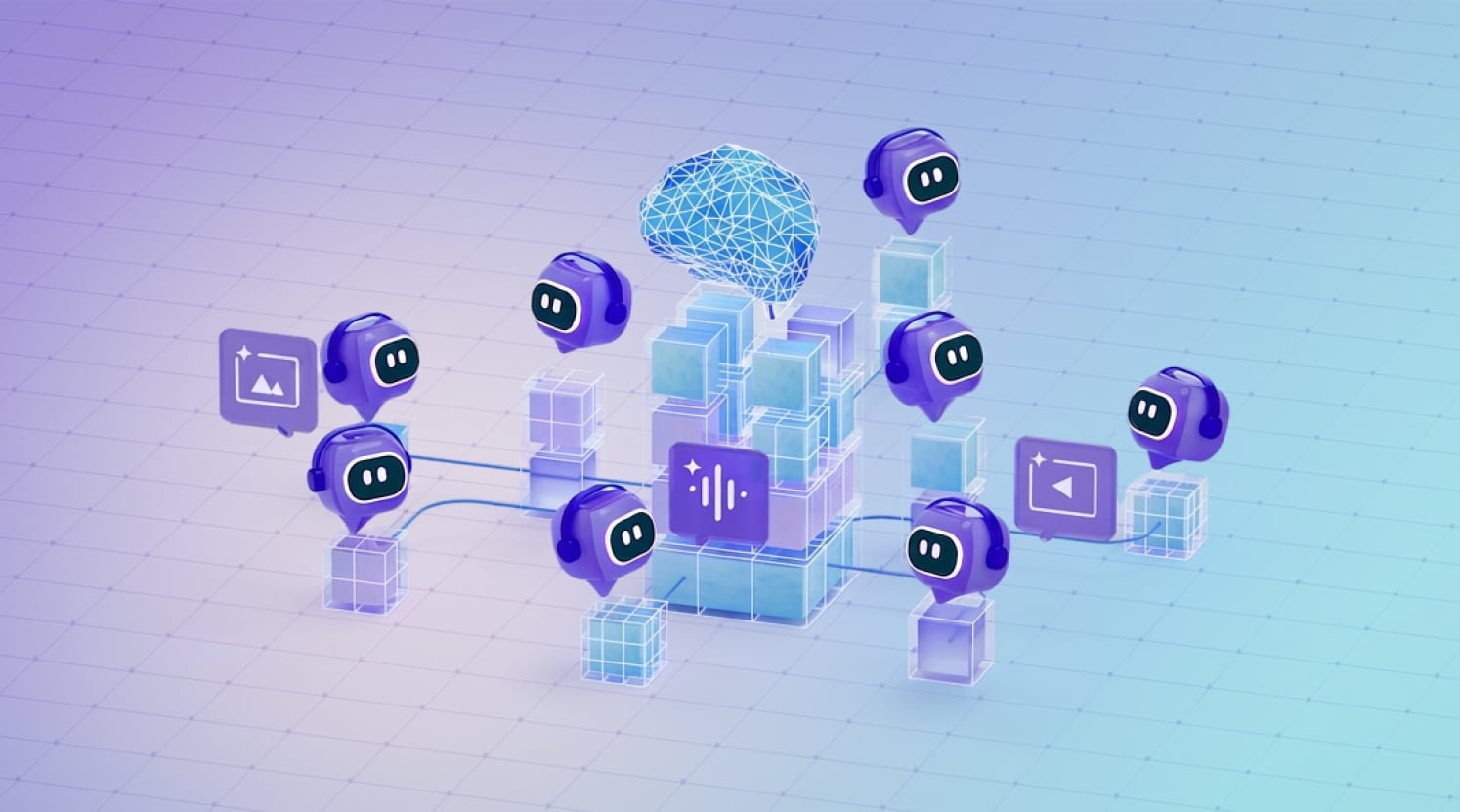
AI agents for RevOps are autonomous software systems that observe data across the revenue stack, then execute workflows without a human triggering each step. These intelligent tools allow enterprise organizations to close gaps between the pipeline report and sales reality. The AI agent operates autonomously through reasoning, and its decisions adjust as conditions change. It’s a point of differentiation separating AI agents in tools like HubSpot from rule-based automation, where logic remains fixed no matter what's happening in a deal.
As organizations prioritize in-the-moment judgment over static reporting, many are rebuilding their revenue operations around AI-powered decision-making.
What Are AI Agents in RevOps?
In RevOps, as in other components of a sales organization, an AI agent is the system doing the work: it weighs the specifics of a deal or a data set and chooses the next move, rather than following a script written in advance. That capability comes from agentic AI, the broader technology giving these systems the ability to reason and act toward a goal without regular human input. Agentic AI describes the capability; an AI agent puts that capability to work in RevOps, whether that's scoring a lead or flagging a stalled deal.
Organizations use RevOps to unify fragmented revenue data and align shared revenue goals across their go-to-market teams. These two ideas fit together for a structural reason: an AI agent's usefulness depends entirely on how much of that unified data it can see and act on.
What Makes an AI Agent Different From Automation
The clearest way to see the difference is in how each one handles a change mid-process. Conventional automation follows the rule it was provided, even after the situation moves past that requirement. An AI agent monitors the situation and updates its next move as new information comes in. Here's where that gap shows up across a typical RevOps workflow:
|
Traditional Automation |
AI Agents |
|
Executes fixed if-then rules |
Evaluates context and reasons through changing conditions |
|
Responds to a single event |
Monitors multiple signals continuously |
|
Operates one tool or completes one step |
Coordinates workflows across the CRM and connected systems |
|
Requires a new setup for every scenario |
Adapts logic as conditions change |
|
Reports what happened |
Determines what should happen next |
|
Example: Automatically sends an email when someone fills out a form |
Example: Detects deal risk and alerts a sales rep before the opportunity grows cold |
How AI Agents Fit Into the Revenue Stack
RevOps provides the systems and data that power a company's sales engine. AI agents connect those systems and are able to act as an orchestration layer across the revenue stack. An agent can update a CRM record, trigger a customer success workflow and coordinate follow-up actions within the same sequence.
This only works when organizations grant agents access across the CRM and connected marketing systems. When an agent operates inside a single tool with limited visibility, it functions more like a recommendation engine than an autonomous operator.
What Changes When AI Agents Enter the Revenue Engine
A cadenced pipeline review once served as the primary way business development teams identified stalled deals. In an AI-enabled environment, AI agents surface risk before the scheduled review occurs. They replace reactive reporting with proactive orchestration, typically identifying issues well before someone refreshes a dashboard.
From Static Dashboards to Real-Time Orchestration
A static dashboard requires a person to interpret the data and decide what action to take next. AI agents continuously evaluate pipeline activity and customer engagement signals, then surface recommended actions the moment they detect a meaningful change; not after someone opens the Monday report.
RevOps Roles: Moving From Data Steward to System Architect
RevOps teams historically spent significant time managing manual data work, including cleanup and report creation. AI agents can now absorb much of that busy work, freeing teams to focus on the logic, strategy and governance frameworks that guide those systems. While the title on the business card stays the same, RevOps professionals are moving away from execution-heavy tasks and toward higher-value strategic responsibilities.
Can AI Agents Replace RevOps Teams?
AI agents change the responsibilities of RevOps teams instead of eliminating them. AI agents can take over manual execution, not strategic architecture or cross-functional judgment. When organizations deploy agents effectively, a three-person RevOps team can support millions in annual recurring revenue (ARR), a workload that might have required eight to 10 people just a few years ago. Organizations can support more revenue at scale without significantly growing headcount.
Industry Pipeline Problems, Before and After AI Agents
The same underlying issue shows up differently across industries: a sales team can see that something's wrong with a deal, but the why stays hidden until it's too late to fix.
|
Industry Pipeline Problem |
Before AI Agents |
After AI Agents |
|
Deals stall for no clear reason |
Sales reps and managers try to determine why a deal slowed. Without deeper context, quoting delays, reduced engagement and shifting buyer priorities can look like the same problem. |
AI agents continuously monitor engagement velocity, buyer activity, and deal signals. They calculate risk indicators and alert teams before a deal goes cold. |
|
Complex pricing and routing decisions create risk |
Teams manually determine pricing exceptions and route customer questions to the right experts, creating opportunities for errors or delays. |
Organizations build pricing and routing guardrails into AI agents before deployment. The agent responds within approved limits and escalates sensitive requests to the right team. |
|
CRM changes create data quality issues |
Sales reps enter information incorrectly when a new CRM structure goes live, forcing teams to clean up inaccurate data later. |
AI assistants guide reps during data entry and enforce the new architecture from the first record, helping teams maintain cleaner data from the start. |
Where AI Agents Already Do the Work
AI agents are already powering RevOps workflows across sales and data management. They are not theoretical concepts; organizations use them today to improve decision-making and automate operational tasks. May Johnson, who works on RevOps client engagements at Kuno Creative, regularly sees these applications firsthand.
Pipeline Monitoring and Deal Risk Detection
A B2B manufacturer using HubSpot came to Kuno with a familiar challenge: deals were stalling, and the team could not identify the cause.
"They would notice that deals stalled and they wanted to understand why," Johnson said. “They wanted to segment specifically by industry to understand why they lost a deal in that sector or why certain contracts took longer to close than others."
HubSpot includes a predictive scoring model by default, but the client's closed-won and closed-lost history had not yet informed the model. As a result, the default scoring system did not reflect how this specific business actually closed deals.
Governance-First Agent Deployment
The same client later wanted to deploy a HubSpot customer-facing agent to address a different challenge. The company offered highly customized solutions, which made pricing difficult to standardize. Leadership also did not want to publish a public price list.
The risk was significant: an agent that pulled answers from the web could provide inaccurate pricing information or route sensitive questions to the wrong team.
The team built guardrails into the AI agent before launch. The agent automatically routes any question involving pricing or deeper product specifications to a human.
"Anytime it asks for pricing... we hand it over to a person," Johnson explained. "Otherwise, it acts autonomously and answers the question itself."
Johnson believes the lesson applies well beyond this client.
"AI agents can be trained exactly to what you want them to do," she said. "There is no reason not to launch and take advantage of the benefits."
A complex pricing structure shouldn’t prevent a company from deploying a customer-facing agent, either. Organizations simply need to account for those requirements when they design the agent.
CRM Data Hygiene During – and After – Migration
A surgical services company came to Kuno during a migration to a new CRM object structure within HubSpot. The team needed to prevent their reps from entering incorrect data from the first day after go-live.
The client's original setup, Johnson explained, "wasn't set up for the AI future-state." The company had created additional custom objects that caused duplicate records and disconnected data.
The team needed a complete re-architecture, not a simple cleanup effort. They reconfigured large volumes of legacy data within the new structure, and AI accelerated much of the cleaning process. Human oversight remained essential throughout the project.
"It required a lot of supervision and back and forth," Johnson said, "but it helped because of the magnitude of the files."
Instead of fixing inaccurate records after launch, the team built an AI FAQ assistant directly into the new architecture. The assistant provides reps with real-time guidance when they enter information.
"It pops up," Johnson said. "How do I enter a new company? How do I add a new contact?"
The approach keeps data clean at the point of entry rather than forcing teams to repair problems later.
The AI agent has now reached its fourth iteration, and that evolution reflects the team's focus on continuous improvement.
"It's not a change of the CRM," Johnson clarified. "The fourth iteration is more optimized, tweaking it to behave in very specific ways."
Sales reps tested the tool during each iteration, which improved adoption in ways a one-time training session could not. Their feedback helped shape the assistant around the workflows they actually use every day. Instead of receiving another system they had to adapt to, reps helped build a tool designed around their needs, creating the ownership and trust that drive long-term adoption.
"How do you make adoption easy?" Johnson said. "By making it a game through gamification."
The result was more than a cleaner CRM. By involving sales reps throughout the process, Kuno helped create a tool they influenced, tested, and ultimately, trusted. That involvement turned adoption from a mandate into a collaboration.
What RevOps Teams Need Before Deploying AI Agents
AI agents highlight whatever already exists in an organization's data, whether that foundation helps or hurts performance. Teams that skip the necessary groundwork risk deploying agents that produce and scale inaccurate results, creating problems that are harder to correct than a careful rollout.
Clean, Unified Data as the Foundation
Research shows that 91% of CRM data is incomplete, and that data quality often declines over time. When agents rely on inaccurate information, they can produce unreliable forecasts and misrouted leads.
Clean CRM data is not optional before an AI deployment. Data quality often determines whether an AI investment delivers measurable value or creates additional challenges.
Connected Systems Across the Revenue Stack
An AI agent creates value when it can access and act across multiple systems. When an organization limits an agent to a single tool, it becomes little more than an expensive recommendation engine.
Real operational value comes from connecting the CRM and marketing stack so an agent can translate decisions directly into action instead of creating suggestions that someone still has to execute manually. HubSpot AI readiness work typically begins with this foundation.
Defined Processes and Governance
Organizations need to establish clear rules before deploying AI agents. Teams must define which data agents can access and when a situation requires human involvement.
As organizations move toward agent-driven architectures, RevOps teams spend less time managing workflows manually and more time designing the operating logic and governance processes to guide these systems.
Kuno Creative and AI-Enabled RevOps
The gap between an AI agent's potential and its actual performance usually comes from infrastructure, not technology. Organizations often have the ambition to implement AI-enabled RevOps before they have the data readiness and process architecture required to make those agents effective.
Kuno Creative's RevOps practice helps organizations close that gap by establishing clean data and defined processes before deploying AI agents. This foundation enables agents to deliver the outcomes organizations expect.
Our HubSpot accreditations, including Solutions Architecture Design and Data Migration, reflect the technical proficiencies this work requires. That expertise translates into measurable client results. BlackLine Safety, for example, achieved $76,800 in annual savings and reduced manual work by 99% after rebuilding its RevOps foundation.
Organizations typically begin with an AI readiness assessment. Kuno evaluates CRM data quality and configures HubSpot to support agent-driven automation.
See how Kuno's RevOps services help organizations build their foundations for AI-enabled growth.

Robin Walters