






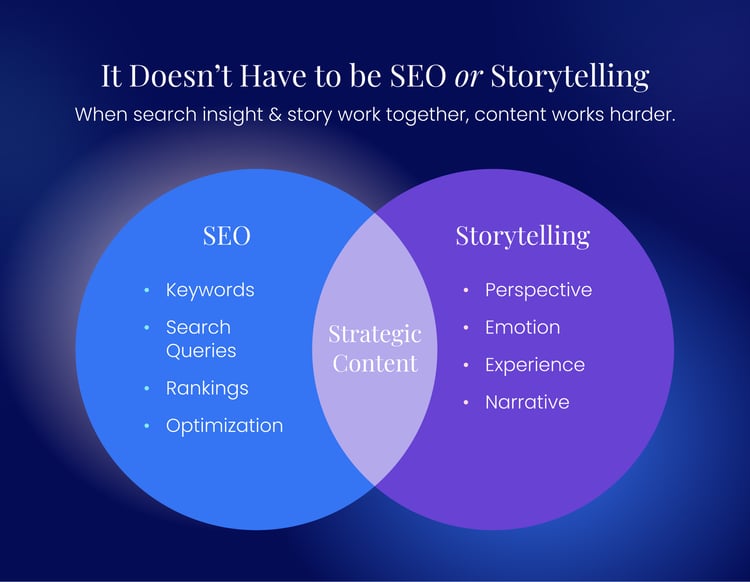
SEO and storytelling once occupied separate corners of the marketing conversation. SEO was the analytical side: keywords, rankings, optimization. Storytelling was the creative side: voice, narrative, emotional resonance. Each had its champions, and content often reflected that divide.
The way people search, discover, and evaluate content has shifted, though. AI is changing how results get surfaced, and buyer behavior has grown more layered. The brands seeing traction are treating SEO and storytelling not as competing priorities, but as a unified strategy.
Here’s what that means for planning, creating and structuring content. Watch the replay of our presentation on LinkedIn Live or read on for insights.
Search Intent as a Window Into What Your Audience Feels
SEO offers something most marketers underutilize: a glimpse into what your audience cares about most. Not what you think they care about, but what they are actively expressing through their searches, in their own words, in real time.
Consider queries like these:
- “How predictive maintenance software reduces equipment failure”
- “How to reduce unpaid bills with patient payment options”
- “How to improve health and safety in the construction industry”
- “How companies can improve employee engagement right now”
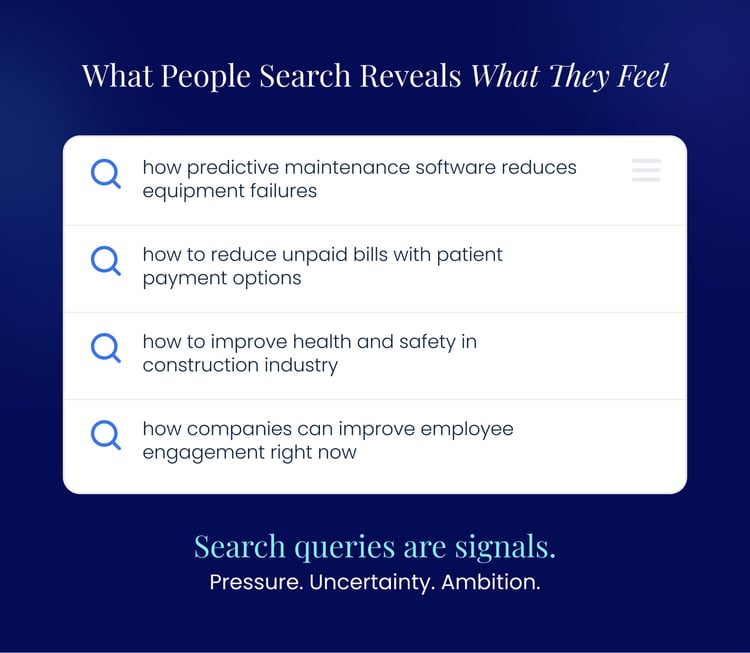
Behind each search is a person navigating real pressure: the need to protect revenue, close a performance gap, reduce risk or find a more sustainable path forward.
Search terms can reflect a question, a frustration or a desire. Content influenced by real signals connects on an emotional level in a way that assumed insights simply cannot.
When it comes to identifying target keywords, group long-tail queries into themes. When you cluster variations together, the bigger business issue behind them tends to come into focus.
Then pressure-test what you see against internal signals. When the language in search matches what your sales and product teams are already hearing in conversations, you’re onto something worth building content around.
A Good Story Connects. A Strategic Story Converts.
In B2B, decisions carry significant weight. Buyers need context, evidence and a narrative they can see themselves inside.
Consider how this plays out around a search query shared above: “How Predictive Maintenance Software Reduces Equipment Failures.”
A strong story begins with the operational reality: the cost of unplanned downtime, the strain of reactive maintenance cycles, hidden inefficiencies that quietly limit performance. From there, the narrative traces a transformation from emergency repairs and uncertainty to advanced planning and stability.
That story gains credibility through substance, drawing on elements like:
- Industry data on revenue lost per hour of downtime
- Statistics on technician time spent responding to emergencies
- A quote from a plant operations director describing what the shift felt like from the inside
- A short video featuring that same operations director to further bring their story to life
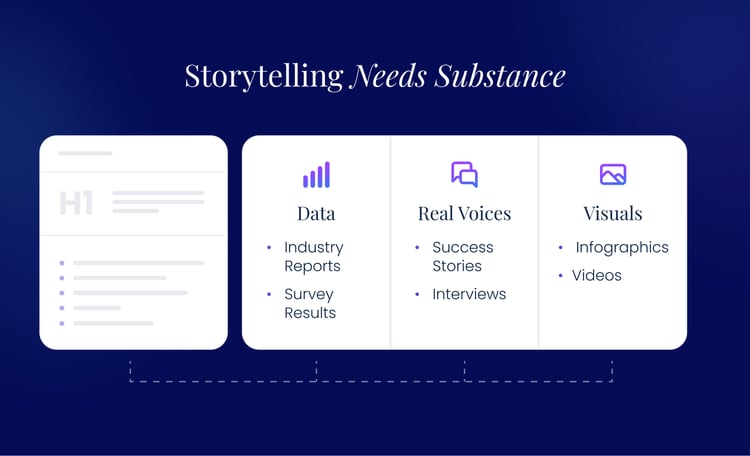
Search engines, AI and humans all need that context. Data tells them what happened. Real voices show them why it happened, and why it matters.
Equally important is the way your content is structured.
AI systems are built to parse content quickly and pull answers from it. When the structure is unclear or the logic is difficult to follow, that process breaks down. When it is clean and well-organized, AI platforms are far more likely to surface your perspective as the answer.
Here’s a format that tends to work well: use a clear question as a header, deliver a direct answer right away, then support it with data, quotes or examples.
Other structural elements that help readers and AI tools alike are:
- Strong headers that match the real questions your audience is asking.
- Short opening summaries that state the point of each section immediately.
- Separated logic that distinguishes the problem, the impact, and the solution.
- Scannable formatting that makes it easy to extract the key ideas at a glance.
Content That Fuels Demand at Every Stage
Buyers do not move in straight lines. They research, revisit, and compare across multiple touchpoints before taking action.
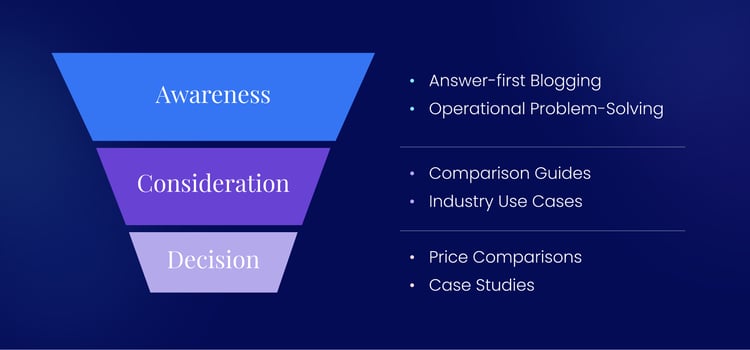
A well-structured content strategy maps to each stage of the buyer journey, with formats that do double duty: supporting buyers wherever they are in the process, while also resonating well with AI search environments.
- Attract: Answer-first blogs draw people in with content that leads with the business reality before introducing a solution. This approach also makes it easier for AI systems to pull your explanation into summaries, since the key answer is right up front.
- Consideration: Comparison guides and evaluation checklists help buyers clearly assess their options, making the decision process feel manageable. Structured formats help AI understand the options and serve up your content when explaining choices.
- Decision: Case studies and implementation guides give buyers the confidence to move forward. Concrete outcomes, real timelines and documented results make for a compelling read, and AI systems tend to favor content that shows proof.
Each asset serves a distinct purpose, and together they create momentum. The goal is a connected system where each piece earns attention and guides the buyer naturally toward the next conversation.
Keeping Your Story Unified in the AI Era
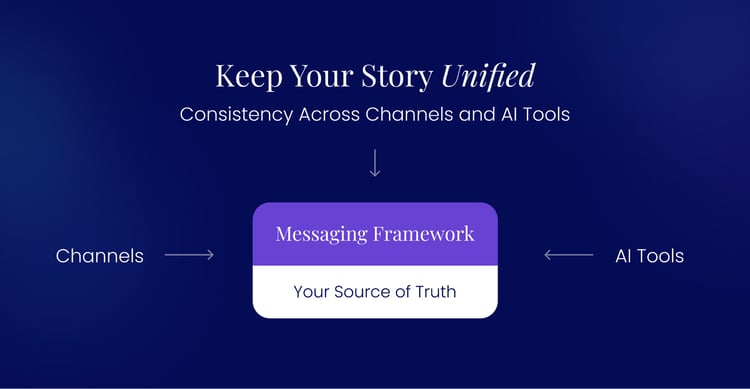
As brands expand across more channels and incorporate AI tools into their content development process, a natural tension emerges around consistency. Voice can shift, positioning can drift and messaging that once felt cohesive can start to fragment.
The foundation that holds everything together is a shared messaging framework: a documented source of truth that should clearly define:
- Brand pillars, including your mission, vision and values
- Audience definition, including your ideal customer profile and buyer personas
- Personality and voice, so every piece of content sounds on-brand and consistent
When that framework is clear and accessible, it can guide both human writers and AI tools, so every piece of content reflects the same story regardless of where or how it was created.
One framework. One consistent story. That is how brands scale content without losing the voice that makes them recognizable.
Bringing SEO and Storytelling Together in Practice
Content has the power to rank and resonate. It just requires the right research, the right structure, and a clear point of view that carries through every asset you create.
At Kuno Creative, our SEO and content marketing teams work closely together to make that happen. Search strategy informs what we create, and content strategy shapes how it gets built and distributed. The result is content that gains visibility across traditional and AI search environments and connects with your audience in a meaningful way that drives them to act.
If you are looking for a strategic partner to help you bring SEO and storytelling together more intentionally, we’d love to connect.

This post was inspired and informed by insights from a Kuno Creative webinar hosted by Senior Content Strategist Bridget Cunningham and SEO and AI Search Strategist Dee Salvador.
Bridget Cunningham