





It’s common to see gaps between marketing activity and sales results. Marketing can sometimes hover around awareness and engagement of the lead lifecycle stages without considering how to fully move those potential leads through the pipeline. Consistent messaging across all channels is vital. Inconsistent brand messaging over multiple channels will not only confuse your target audience, it has the potential to turn them to your competitors.
Integrated marketing - or omni-channel marketing - can effectively bridge that gap. Through effective, thoughtful use of your marketing channels, you can take engaged leads on a journey through your pipeline, creating a higher likelihood they’ll come out the other side as closed-won leads.
What Is Integrated (Omni-Channel) Marketing?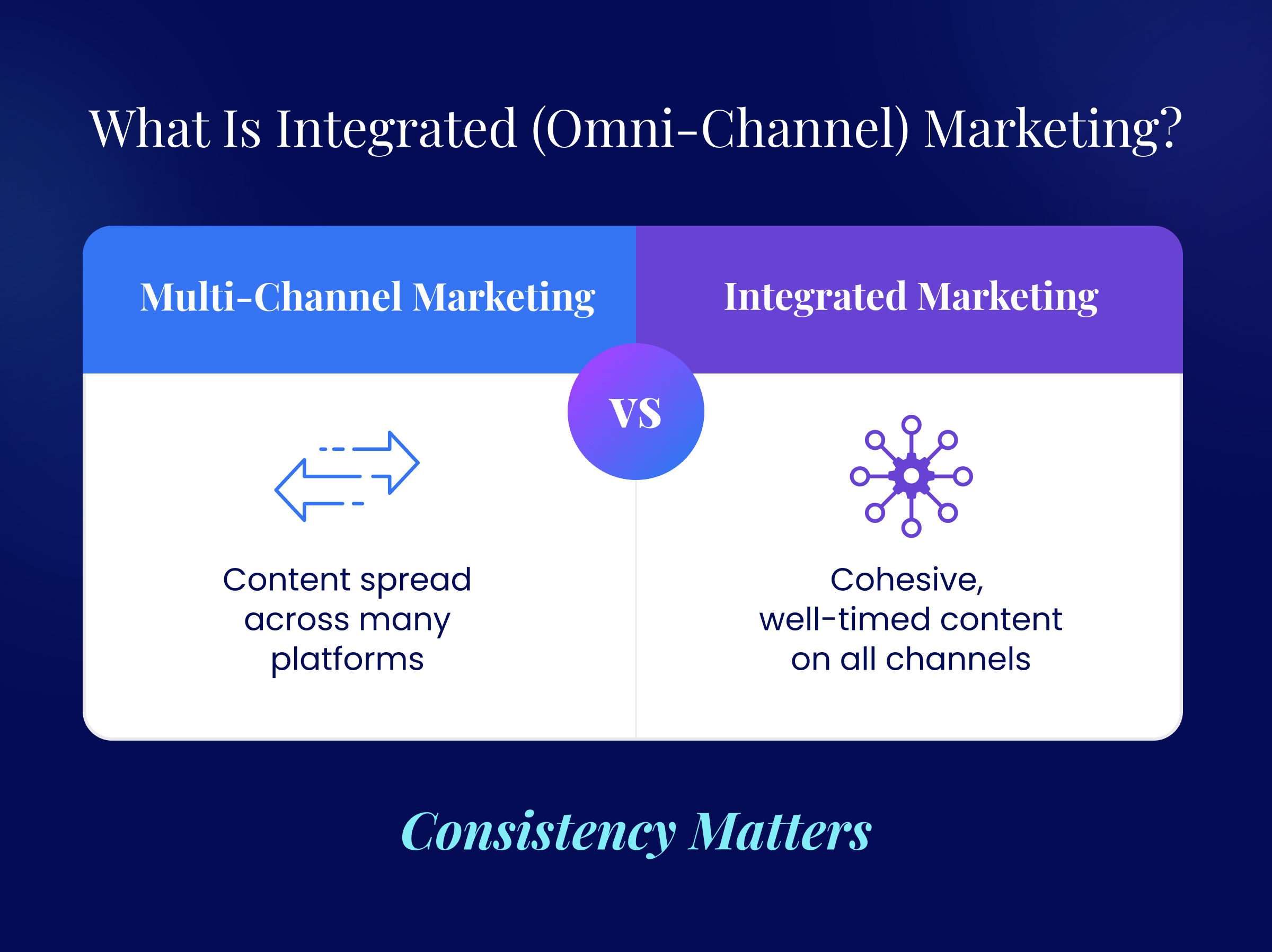
- Integrated marketing aligns messaging, channels and timing to guide prospects through the full buyer journey toward revenue
- Multi-channel vs. integrated marketing: Multi-channel marketing sees your (potentially varied) content across many different platforms, whereas integrated marketing ensures all your channels have cohesive, well-timed content to draw in your audience and lead them through the sales lifecycle
- Consistency across channels matters more than channel volume because you want to show up for your audience in a way they expect, trust and value. Clicks are follows are important, but they don’t necessarily point to closed leads
Understanding the Marketing and Sales Lifecycle
With integrated marketing, lifecycle thinking matters more than isolated campaigns. The reason for this is consistency. Campaigns can be a great tool, but day-to-day marketing should consistently focus on full-funnel marketing. This means using the stages of the lifecycle funnel as a framework for creating your content. Each stage has a different audience with differing needs. Your content should be tailored to each stage with the goal of moving your audience further into the funnel. As a refresher, here are the different lead lifecycle stages:
- Awareness
- Engagement
- Contact
- Marketing Qualified Lead (MQL)
- Sales Qualified Lead (SQL)
- Opportunity
- Closed(-Won/-Lost)
How Integrated Marketing Facilitates Movement at Each Lifecycle Stage
Let’s take a closer look at each stage of the sales lifecycle and how an integrated marketing approach can move your leads through to the end.
Awareness → Engagement
Your awareness stage audience realizes they have a problem, but they’re not sure what to do about it. Consistent integrated marketing forms a cohesive, unified message across all your channels - digital and print - to keep your message clear and deliver value at every touchpoint. Whether your audience sees your company through an article in a magazine or a short reel on social media, it should be clear who is behind it through the use of consistent colors, messaging, a mascot, etc.
Engagement → Qualified Lead
Let’s move your engaged contacts into qualified leads. One tried and true way to do this is through nurture campaigns. These are focused more on your audience’s behavior and can efficiently and effectively be done with personalized emails. Sending emails based on how leads interact with your content or vital keywords can keep you top of mind and build the trust they need to move forward.
Incorporating integrated, meaningful data into your personalized emails or even targeted ads during this stage is another way to meet your audience where they are. According to EMarketer, ”three in four consumers were more likely to pay attention to ads that felt relevant to them.”
While creating this personalized content, remember to focus on the audience segment that shows it’s ready to move forward. While it can be tempting to focus on the audience with the most volume, going solely by a vanity metric doesn’t necessarily show any promise for moving down the pipeline. Your time will be better spent on prospects who give signals that they are ready to engage.
Qualified Lead → Opportunity
Sales and marketing should work together through the entire range of lead lifecycle stages. Moving qualified leads into opportunities is bolstered by this process and the use of sales enablement: resources your sales team has access to for sharing with qualified leads. Think blog posts, videos, whitepapers, product guides. Since these content types are usually crafted with insights gathered through your marketing department, it’s a good way to ensure you’re going to meet your qualified leads where they are and help them more fully understand what you can offer them.
You’ll also want to reinforce the message you’re sending them through cohesive channel reinforcement. Having the same message spread over all your marketing touchpoints is exactly what integrated marketing is all about.
Opportunity → Closed-Won
It’s time to move your prospects through the final stage of the sales lifecycle funnel. At this stage, they’ve seen a lot of what you can offer and they’re ready to make a decision. Integrated marketing is going to look like reinforcing the value of your product or service through retargeting ads, email and sales touchpoints. This might look like following up with emails tailored to the content your leads have been engaging with, keeping them in the funnel and increasing their confidence in the solution you’re offering.
While it might be tempting to stop using lead scoring frameworks once you gain a qualified lead, maintaining these frameworks and even tying them to automation to keep track of any swings in scoring enables you to keep a temperature check on any opportunities you might otherwise miss.
H2: Messaging Is the Engine That Powers Your Pipeline
Though each of these lifecycle stages require their own type of content to move your prospects through the stages, one thing remains the same: consistent, quality messaging. While creative variety might be more flashy, continuing to show up for your audience across all platforms with a message they can depend on is going to move them through your pipeline more quickly. Not only that, but knowing what pain points your audience has and giving them the proof that your product or service is able to solve them shows them the possible outcomes you offer.
The Revenue Impact of Integrated Marketing
For some real-life proof of the effectiveness of integrated marketing, take a look at the work we did with this capital equipment manufacturer. A few quick highlights:
- 5 high-intent contacts generated
- $130k opportunities from retargeting campaign
- 818% increase in clickthrough rate
Separating out your sales team, marketing team, et al, and trying to accomplish integrated marketing simply doesn’t work. Keeping things siloed while you move your prospects through the pipeline will reflect in your messaging.
While overall impressions and other vanity metrics can still be important, the real value in your KPIs is going to be through tracking how your marketing is directly affecting your overall revenue growth. Are the views on your website turning into prospects who are moving through your pipeline?
Common Mistakes That Break the Pipeline – and How to Fix Them
Even with this information, there are some common mistakes when switching to integrated marketing.
- Channel-first thinking: Think of your marketing as one cohesive message across all channels and media types
- Campaigns that stop at MQL: There are three vital stages after MQL! Stopping your messaging here risks leaving those leads confused and looking elsewhere to solve their pain points
- Inconsistent messaging between marketing and sales: Equipping your whole team with proper materials to spread a consistent, cohesive message eliminates frustration and leads to better outcomes within your team and through your marketing
- Lack of lifecycle measurement: Tracking your prospects gives you a better idea of lifetime value, where they’re getting caught in your funnel, and what marketing tactics are working well. Not only that, the data gathered will help you pinpoint exact timing and messaging needed to draw in your target audience
Build an Integrated Marketing Strategy That Fuels Revenue
Let’s recap. The first step towards a successful integrated marketing strategy is to make sure you build out content for all channels based on lifecycle stages. You want your goal to be drawing your leads to and through each stage. Creating content solely based on channels is going to leave your audience confused and wanting. Second, have shared definitions that your marketing and sales team can use in tandem. A shared vocabulary will make it simpler to hand your prospects off to sales once they’re ready. Third, the data you collect should be used to orchestrate the messaging as well as the timing of your content, ensuring your prospects see the right message for where they are in the sales funnel. And finally, success should be measured by meaningful metrics, like pipeline contribution. Vanity metrics like impressions can feel good, but they don’t lead you where you want to go.
If you’re ready to get started building out a successful integrated marketing strategy, Kuno Creative has a team ready to assist you.


Lauren Kleyer