Posted by Chris Knipper on Tue, Jun 22, 2010 @ 03:28 PM
Companies spend considerable time and money generating leads. A wide variety of inbound marketing techniques -- blogs, Facebook, Twitter, white papers, ezines, enewsletters, press releases -- are used to attract potential customers to your website and engage their interest. But attracting leads is only half of the marketing equation. Capturing those leads and then converting them into sales is what puts money in your profit column.

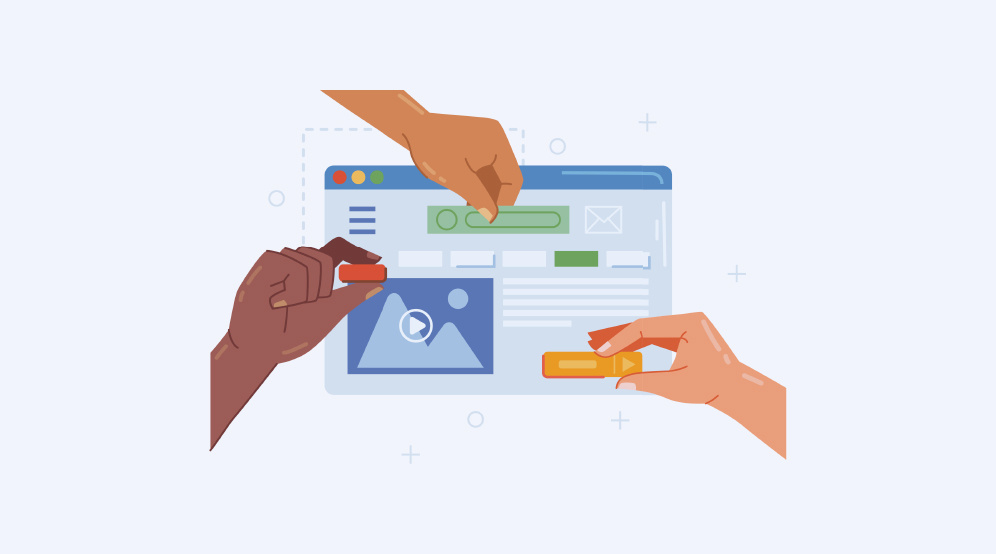
An effective landing page has 5 critical elements:
- Grabber headline. An attention-grabbing headline pulls in site visitors and entices them to scan your lead capture page. The goal is to engage visitors' emotions on a visceral level. Put your promise in the headline so visitors immediately understand what they'll gain by opting in to your offer and what they'll lose if they don't.
- Strong offer. The stronger your offer the more likely visitors are to opt in and provide the lead capture information you seek. Tag your offer to the search parameters most likely to land visitors on your capture page. Consider offering a range of items requiring different levels of information sharing with the highest value offers requiring visitors to provide greater levels of contact information. For example, a name and email address might be required to receive your enewsletter; but a downloadable white paper might also require a home address and telephone number.
- Video hook. Nothing hooks attention like a video. We live in a visual world. A video that starts playing as soon as your lead capture page opens instantly command's the visitor's attention, creating a more personal connection with site visitors.
- Bullet lists. Lists are easy and fast to read and assimilate. Bullet points distill important information down to its quickly digested essentials. Focus bullets on the two most powerful human motivators: gaining pleasure and fear of loss.
- Opt-in opportunity. Two types of people visit lead capture pages: rapid responders who want to take immediate action and careful cogitators who need to think it over first. Your lead capture page should provide both a highly visible fast action opt-in button near the top of the page, and a second opt-in opportunity farther down the page for those who need to read more information before providing their contact information. Your should also follow up with captured leads via lead nurturing campaigns - sending out follow up information and offers via e-mail at regular intervals. The idea is to keep people engaged, keep them coming back for more. Your chances of converting these leads to customers go up with each repeat visit.
How effective are your landing pages? We can help.
Photo credit: bulldog1
Posted by John McTigue on Thu, Mar 25, 2010 @ 11:58 AM
One of the most effective ways to convert leads into customers is creating a lead nurturing campaign. Basically, you're following up after a visitor signs up for one of your offers on a landing page. More often than not they have signed up for a free download or event, and you still want to convert them into a paying customer for one of your products or services. Here are 5 tips for building an effective lead nurturing campaign and getting results.
-
Set up three lead nurturing e-mails to automatically go out to a lead the day he/she signs up, two or three days following that and five to ten days thereafter. Make sure you include an opt-out link in your e-mails. - Design your e-mails to be attractive but not cluttered. Make sure your brand is well displayed in a header banner along with the topic of the e-mail. Make sure any graphics or links use the full url path to your website. Keep it short and to the point.
- In each e-mail offer them something new but related to the original lead capture offer. For example, if they downloaded a whitepaper from the original landing page, invite them to a webinar on the same subject. Don't assume that they will be interested in something entirely different.
- Mix it up. In ensuing e-mails offer them new opportunities to learn more about your products or services, but don't make it too "salesy". Instead, you're offering them a chance to learn something new and valuable. Most of all, you're trying to engage them in a conversation - that's when you can build a relationship and ultimately sell them your wares.
- Just because they don't click through on your lead nurturing campaign, don't assume your visitors are not interested. If they haven't opted out, they're probably still willing to receive your information. Include them in monthly e-mail newsletters and announcements. Things change, budgets change. Your rejection today can be your best customer tomorrow.
Finally, one of the very best ways to convert is to talk to your leads. If they leave a phone number, chances are they want to talk. If they don't, you can probably find it on their website. In either case, your strategy is to listen, find out how you can help. Don't be a salesman. Be a resource.
Posted by John McTigue on Mon, Nov 23, 2009 @ 10:25 AM
I'm addressing this post to those of you who think capturing leads from your website is all about tools and analysis. Those are things that help with capturing leads, but they aren't the gatekeepers. Successful lead conversion boils down to strategy, psychology and value.
I'm assuming you're already done a great job of attracting visitors to your site through content, SEO and socializing, i.e. inbound marketing. Now what?
Think about it from a visitor's point of view.
Why am I here? What has brought me to your website? Was I searching for something, and if so, what? Did I know you already, and I'm here to see what's new? Did I buy something from you before and want more?
Chances are, I'm a new visitor. Unless you have a well known brand, most of your visitors are going to be newcomers. I probably found you via a search or a blog reference in social media, or maybe a blog comment or other mention on a web site. Now that I'm here, you have 2 seconds to sell me.
Hey, nice website. Very pretty. But, what's in it for me? I'm going to bounce off your home page or blog unless you convince me otherwise, and you'd better do it quickly. Unless I'm just looking up information, you need to offer me something valuable for free, and I'm not prepared to drill down to find it or read some obnoxious landing page. I need to understand what you are giving away at a glance, and I need to know why I should sign up right now. As a consumer, these reactions are built-in to my psyche and they happen instantly.
Strategy
Your strategy should address my reactions directly. You must:
- Figure out what I want.
- Give it to me, preferably for free.
- Don't make me jump through hoops. If you do, I'm gone.
Art
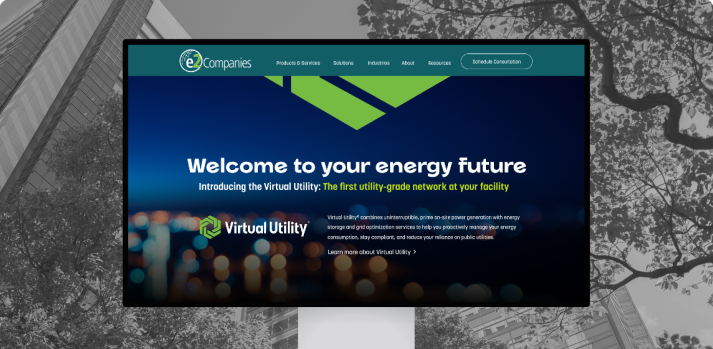
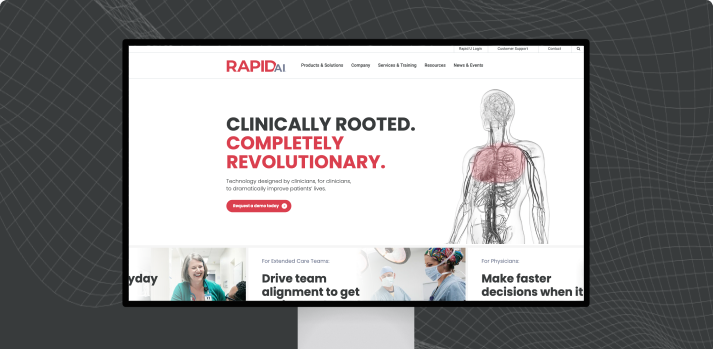
Now you must bring art to the table. Create a compelling graphic that conveys the value of your offer and makes it imperative that they sign up immediately. Here are some great examples, courtesy of HubSpot.
Science
There is some science to successful lead capture. Statistics and eye-tracking studies tell you what kinds of calls-to-action are popular and where to place them, so be aware of such studies. You also need the software to measure lead conversion, analyze results and follow-up through lead nurturing. You should create multiple offers, calls-to-action and landing pages. Throw them up on the wall and see which ones stick. Fine tune your offers to optimize results.
Bottom line
You can't get to the measurement step unless you nail the lead capture strategy first. You must convince them before you can convert them. Bring the value and make it easy to receive your offers. Simple idea - tough to do really well.
What are your lead capture strategies and how well do they work?
Posted by John McTigue on Thu, Sep 10, 2009 @ 07:21 AM
We recently completed rebuilding our website using the Hubspot Inbound Marketing software platform. That’s two complete website makeovers in the course of one year. Why did we decide to rebuild, and why did we choose Hubspot?
Giving credit where it’s due, we were introduced to Inbound Marketing at the beginning of 2009 via several webinars and marketing kits published by Hubspot. Few other sources were talking about it at the time, let alone providing valuable how-to’s and strategies.
I decided to find out much more about Inbound Marketing by embarking on a self-taught mission with the goal of learning by doing. I started blogging, tweeting, commenting and engaging in a wide range of social networking sites. I chronicled my adventures in a blog series called Inbound Marketing Journal. At the end of a few months I had a sizable following and had learned enough to write my own Inbound Marketer’s Handbook, an e-book for small business owners and marketing executives designed as a business insider’s overview of the strategy and tactics of Inbound Marketing. This step is one of the recommended building blocks of Inbound Marketing strategy and has been successful in exposing our ideas and services to a new online community.
At this point we knew that Inbound Marketing was a powerful way to improve brand awareness and sales, but how could we incorporate it into our everyday business and provide it as a service for our clients? After attending the Inbound Marketing Summit in Dallas, I knew what we had to do. Hubspot software was the key ingredient. Our first step must be to make our own website a powerful Inbound Marketing engine using Hubspot – to improve our online exposure, capture leads and convert them to customers. Then we could demonstrate our expertise using a real working website. We decided to retool our entire site to fit our new strategy. The design, keyword-rich content, calls-to-action and landing pages are all crucial components of getting found online and converting visitors to customers. We launched our new site a few weeks ago, and already we are seeing greatly increased web traffic and leads. We use the Hubspot KeywordGrader, PageGrader, BlogGrader, LinkGrader and LeadTracker every day to optimize our blogs and pages, monitor results and keep things rolling.
No, I’m not a paid Hubspot employee. It may sound that way because I am an advocate. With full disclosure in mind, we are a Certified Hubspot Partner, which means that we sell and support their software. There are many technologies available in social media marketing, seo and blogging, but none of them work together in one coherent framework like Hubspot software. That’s why we chose it. Rebuilding your web site and changing your marketing strategy may seem like a daunting and perhaps expensive task. Consider the cost of standing still, however. How expensive is it each time one of your competitors grabs a great client from your grasp? In our competitive market rebuilding our site using Hubspot was a no-brainer.
How does your website stack up against your competitors?
Click here for a free report.
Posted by John McTigue on Wed, Sep 09, 2009 @ 09:04 AM
Inbound marketing is rapidly gaining popularity as a relatively inexpensive means to improve lead conversion rates and increase sales. Faced with marketing budget decisions for next year, many business owners wonder whether or not to completely replace traditional brand marketing methods with blogs, social media and search engine optimization. In many cases it makes sense to blend inbound and outbound marketing, when the strengths of one support the weaknesses of the other. Here are some examples.
Example 1 – Entering a New Market
Let’s say you’ve recently committed to an inbound marketing campaign with the business goal of improving web traffic by 200% and sales by 20%. You’re focusing your campaign on several counties, some of which are suburban, while others are more rural. The question is how will local residents find your blog and social media presence in the first place? Currently, if people search for local businesses in your market, your site isn’t listed. That’s one of the objectives of the inbound marketing campaign. How do you get them to follow you on Twitter and Facebook if they can’t find your site? Try some good old-fashioned brand marketing. Place some attractive billboards around the counties at key intersections announcing a promotional offer and direct people to a well-designed landing page to capture leads and announce your blogs and social networking venues. Try a short radio spot with the same pitch. E-mail your announcement to your current contact list and let them know about your new site, blog and community spirit.
Example 2 – Rolling Out a New Product or Service
Advertising is still one of the best ways to get peoples’ attention. Over time consumers grow weary of the same old intrusive ads blanketing the media, but for a quick impact to draw attention to a new product or service, there’s nothing like it. Get the buzz started with some clever “coming soon” ads to whet viewers’ appetites. If possible, target a special date that doesn’t conflict with some other popular event. Give people sneak previews via your web site, blog and social media – but don’t forget to capture your leads via landing pages! When the roll-out date arrives, throw a party of some kind, online or at a public place. Offer special promotions and prizes. Get them enrolled in your community sites and signed up for your RSS feeds. Reel in as many leads as possible and make sure they become loyal followers through your follow-up inbound marketing campaign.
Example 3 – Giving Back to the Community
Start by getting involved with local or national community outreach programs or charities. Offer your marketing (or other) expertise as a way of helping them reach their goals. Become a thought leader. Give free talks and webinars where you cite your own company’s efforts to get found online and capture leads. The main benefit will be helping struggling businesses and charities in your area, but you will also meet business leaders and potential clients. Word of mouth is still (and will always be) the most successful form of marketing. As you meet people and get the word out, don’t forget to invite them to join your online conversations via blogs and social media. You will start to build a strong following that trusts your judgment and is far more likely to do business with you.
How does your website stack up against your competitors?
Click here for a free report.
Posted by John McTigue on Tue, Sep 08, 2009 @ 11:33 AM
In my recent post “Time to Change Internet Marketing Horses” I talked about the ineffectiveness of using single methods, such as SEO by itself, to accomplish marketing goals. I suggested that Inbound Marketing provides the best alternative, by connecting the dots between great content, social media marketing, SEO and lead capture. Let’s take a closer look at how this works.
As a best practice, we always start with inbound marketing strategy. What is the goal of your Inbound Marketing project and is it measurable? As an example, let’s say that we are a furniture dealer. Current sales have dropped over the past 8-12 months by 30% due to the economy. Looking back a bit further, we see that sales have actually been declining steadily over the past three years, so it’s not just the recession at work. We’ve been spending consistently on newspaper ads, direct mail and occasional radio spots for special events, with no apparent boost in revenues. We have a website where we mirror our advertising, but we have no idea how many customers come from the Web or any other marketing venue. On average we get 20 sales a week at $2,000 per sale. We would like to increase that to 25 sales per week, for an additional $40,000 per month. If possible, we would like to accomplish that goal without significantly increasing our marketing budget, and we would like to see direct measurement of results to compare with past performance.
Step 1 – Prepare the Launch/Landing Pad
We need to be able to attract new and current customers, capture them as leads, follow up and convert them to sales and measure results. Ideally, we want to do this in one place using one set of tools. Your website is the perfect launch/landing pad. Our to-do list includes:
- Redesign your website – make it clean, inviting and most importantly, obvious to the visitor what’s on sale and how to get it.
- Make the web site search engine ready (seo) so that we attract new visitors from Google and beat the competition to the punch. This is where SEO comes in. We use the Hubspot Website Grader and Page Grader to make it easy to optimize our sites and individual pages.
- Do our homework on the best keywords for our industry and products. What words will our future customers search with to find our products? We use the Hubspot Keyword Grader to find the best keywords that we can rank on and track them to measure how well we do with each keyword or combination.
- Create attractive landing pages that will convert visitors to leads. Offer your visitors something valuable, like a $100 discount if they sign up online. The whole point is to get them to sign up so that you can follow up and convert them to customers. Make sure your landing page is obvious to casual visitors using appealing calls-to-action throughout your site. We can do this easily using Hubspot’s Landing Page Wizard that helps you easily create great landing pages and calls to action.
Step 2 – Blog and Promote
- Now we need to get the word out. You must have a prominent blog featured on your website and use it early and often. Blog every day if you can. Blog about subjects of interest to your customers. Talk about or show how customers are using your products. Come up with creative ideas. Use videos, slideshows or photo galleries that show off your products and involve people in exchanging ideas. Don’t forget to add your important keywords to blog titles and content. This is where you get the SEO benefit as your blogs are spread around and indexed by the search engines. Also don’t forget to link to your landing pages from your blogs. Remember the objective, to convert visitors to leads and follow up to convert them to customers.
- Get involved in the community – join the major social networking sites and start building a community of people interested in furniture, for example. Network with them daily, providing links to blogs you find via your RSS feeds or participate in discussions. Establish yourself and/or your company as a community leader, one who gives a lot and doesn’t ask much in return. You can promote your own blogs, as long as they are helpful and interesting. Go easy on the direct advertising. That’s what your landing pages are for. Don’t forget to promote your blogs on the social bookmarking sites such as Digg, Delicious, Reddit and StumbleUpon. You get an additional SEO benefit from these sites.
Step 3 – Capture Leads, Follow-up and Measure
- Our blogs, landing pages and social media networking are increasing traffic to our site and people are starting to sign-up for our discount offer.
- We measure results over time using the Hubspot Lead Tracking tool and Lead Funnel. As leads come in, we call them to thank them for their interest and invite them into our showroom. When we make a sale, we go back to the Lead Funnel and indicate a conversion to customer. Now we can track the entire marketing-sales cycle in one place.
- We can also evaluate our marketing program and make adjustments to improve results. We can try different landing pages and different blog subjects to see which ones capture the most leads. We can publish polls to measure customer preferences directly and monitor blog comments to gauge customer sentiment.
- We report results to Senior Management periodically. In the above example, we need 5 new paying customers a week. With a reasonable investment in Inbound Marketing (software, labor and creative juices) we have increased Web traffic 5-fold in a few months, and our visitors know us from our blogs and social networking. We’re up to 1000 new website visitors a week and we are converting them to leads at 10%, or 100 new leads per week.* Our sales team is doing a great job following up and converting 10% of these leads to paying customers, or 10 sales per week.* In a short period of time we have exceeded our sales goals by 100%.
There’s more good news. Now we know exactly what works and how to tweak our program to gain even better conversion rates. Our investment has not only improved sales, but it has also given us a means to measure results and build new campaigns going forward.
* These numbers are just an example, but not an unreasonable one with a solid Inbound Marketing program.
How does your website stack up against your competitors?
Click here for a free report.
Posted by John McTigue on Sun, Aug 23, 2009 @ 08:15 AM
If you're looking for a fun article or video about Inbound Marketing - this ain't it. If you're a business owner wondering how the heck you can improve sales, and what it will cost, you've come to the right place.
If you've read any of our blogs or perused the Web site, you'll know what Inbound Marketing is about - creating and sharing great content that attracts leads, then converting leads to customers. What throws people off is that the attraction part involves social media promotion, and many business people think that's a waste of time and money. The common myth is that Inbound Marketing and its associated social media tactics are "soft sciences" that can't be translated into hard dollars. Nonsense.
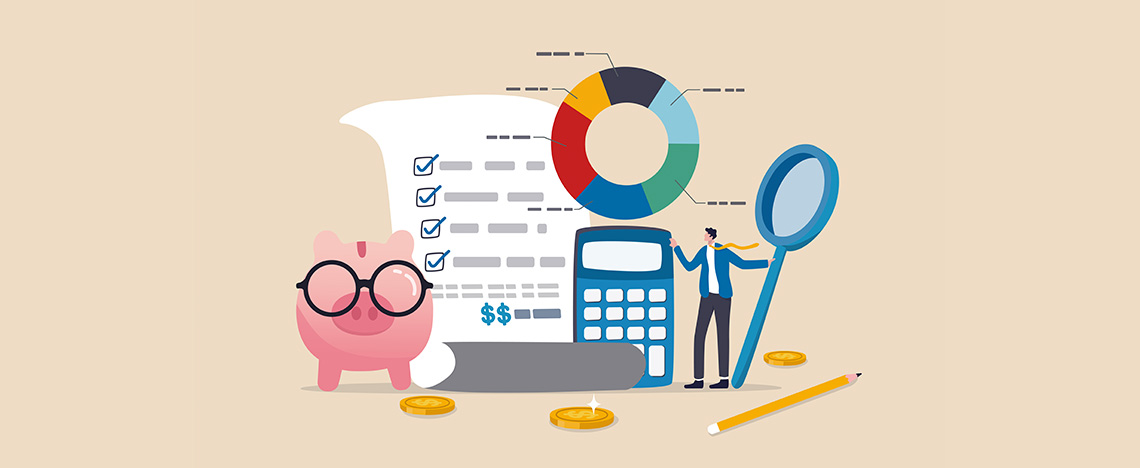
Let's look at this like any good CFO would - let's create an income statement and see what goes into each side of the equation.
Revenues
- Sales from Inbound Marketing
- Factors: Web traffic, lead conversion rate, conversion to customers, repeat business
- Influencers: Content quality, publication rate, social media quality, social media quantity, social media engagement quality & quantity, inbound links, website design, SEO on-page, calls-to-action, landing pages
Expenses
- In-house Labor
- Outsourced Labor
- Software License Fees
- Website Fees
- Graphics/Media Costs
- Events, Direct Marketing
The name of the game is finding the right mix of cost factors (expenses) that optimizes sales from Inbound Marketing. This is what we call Inbound Marketing Strategy. It's not going to be the same for every company. Here's a typical scenario that should help you think about the economics:
Company: Small Business With Limited Available Manpower and Experience in Inbound Marketing.
Current: For the sake of argument, this company provides services valued at $5,000 per service call. Each new customer on average needs two service calls per year or $10,000 gross revenue. Currently the website produces no new leads.
Strategy: Client will need to outsource Inbound Marketing labor plus pay fees for website design and Inbound Marketing software, plus some additional fees for graphic design, events and special promotions. Total annual commitment: $30,000 - $40,000 (this is just an example, but not unrealistic). Break-even results from 3-4 new leads converted to customers per year. With a well-run Inbound Marketing program, this should be doable within 1-2 months on average. Net profit: 10 months @ 2 leads/month = 20 leads = $200,000.
Summary: These factors will vary from company to company by products and services offered, historical marketing efforts, manpower and expertise, industry and market. It's also important to consider that with a successful Inbound Marketing campaign, it may be possible to scale back on other forms of marketing, which goes right to the revenues side of the equation. Success in Inbound Marketing is directly correlated with quality and quantity of the content and social media interactions, i.e. you get what you pay for. So, the next time a marketing company or consultant puts a proposal on your desk, think about the economics of Inbound Marketing and ask questions.
Posted by John McTigue on Fri, Aug 21, 2009 @ 01:04 PM
I'll start with the marketing takeaway: if you want people to sign up for something, offer them something they want.
Inbound marketing is a process, and all the steps are important, but if the worm on the end of your line isn't actually a big juicy steak, forget about it. Yes, you need a nice website and lots of good blogs to get peoples' attention. Yes, you need effective calls-to-action and landing pages to keep their attention and make them hungry for more. Yes, you need to promote your stuff in social media. But none of that does you any good if the prize isn't real and isn't valuable to your audience.
I'll give you some real evidence of this. Last night one of our clients asked us to build them a landing page for a special promotion. It was for a business education-related course on CD's. They were asking $1000 for the course, and it was being promoted in a webinar. I know what you're thinking, it must have been one hell of a course for $1000. And you'd be right. In one night they made over $50,000. Now that's ROI if you ask me. Obviously the folks loved the webinar and were ready to pony up a Gover Cleveland for the CD's. They used all the right Inbound Marketing tools to make sure nothing stood in the way between their hungry customers and their steak, but it was the steak that showed them the money.
If you want to learn more about Inbound Marketing, download our free Inbound Marketer's Handbook.
Posted by John McTigue on Thu, Aug 06, 2009 @ 03:24 PM
Janet Fouts and John McTigue were tweeting about landing pages the other day and decided to create a joint blog on the subject. John started the conversation, "anyone else automatically think it's a scam when you see a lousy looking landing page?" Janet replied "Yup, if it's bright blue 18 pt text with red links I bail without reading". We could go on all day. Unfortunately with shortened url's and teasing tweets, you can't tell what you're going to see until you get there. Then, at a glance, you can tell it's time to bug out fast. Let's review some of the top turn-offs we see on landing pages.
Janet's Top Turn-Offs
- All the titles are H1 in bright red or default link blue.
- Things are flashing at me.
- Repeating the same jargon over and over before I get to what the product is.
- A disembodied head talking to me immediately (and loudly) after launching the page.
- Market your way to millions, wealth, riches, more hair, better looks.
- Psssst, this page is SECRET!
- This offer is limited to the first thousand respondants, get it before it's gone.
- Call to action at the bottom of the page, way below the fold.
- By the time I get to the end of the page I'm confused.
OK, you got me to come to this page from an offer. I likely know what it is I'm here for so why do you have to hit me over the head and drag me into the bushes before I can get it? Give me a one sentence description and get on with it or I'm outta here.
John's Top Turn-Offs
- The page looks like a stylesheet test - huge H1 headlines, then each line gets progressively smaller UNTIL YOU GET TO THE CALL TO ACTION. Ouch, painful on the eyes! Just for fun there's lots of red and blue and whatever other obnoxious colors the author can find.
- The page reads like a death threat - YOU MUST DO THIS NOW OR ELSE!
- The page is about 10 miles long - and you have to read the entire thing to figure out what the offer is - and of course you never do.
- You read about 5 miles of the page, then you have to click through to a "more info" page - Ha! Good One!
- Lots of extremes - THIS IS THE BEST BOOK EVER WRITTEN or MILLIONS HAVE BENEFITED!
Bottom Line - the offer should sell itself. State the offer briefly. Make it easy to get the goods. Keep it simple. If the offer is good, they will come.