Brand and Capture

Current Articles | RSS Feed RSS Feed

Off the Grid: Have Your Hugged Your Internet Today?


I'm not sure if anyone noticed that I've been "off the grid" for the past five days. No, it wasn't voluntary and no, I wasn't crashing around through the Amazon rain forest. Through a strange confluence of hardware failure and tropical weather, I found myself without broadband Internet for days. I live in the country, so driving to Starbucks really isn't an answer either. I was able to read and respond to e-mail via dial-up. Yes, that's right, dial-up. Amazing what we lived with just a few years ago. Granted, this is all trivial compared to what people go through in real natural and man-made disasters, but being off the grid for a few days was an eye opener for me. So, what have I learned by going backwards for a few frustrating days?

  1. are we hopelessly addicted to the internet and social mediaWe're technologically co-dependent. I realize that not all of us are on social media all day every day, and some of us really enjoy being offline - but then there's the vast majority that freak out when the power goes off or the connections are gone. This hit me right away, how addicted I've become to that broadband pipeline.
  2. When you're offline, there's time for stuff. I found myself with none of the usual tasks - blogging, inbound marketing, crm, social networking - so I had many new, undiscovered hours to work with. So I started writing. Not blogging, writing. Something I've been meaning to do for years but never found the time. Yes, I still had e-mail for emergencies, but since it required dial-up, I pretty much ignored it.
  3. Where are we going with our lives? Yes, having time gives you time to consider some big questions. All the time we spend online - is it really enriching our lives, or wasting it? Tough call. I know I'm totally addicted, because now that I'm back online, here I go with my usual habits again. Am I really contributing to my family, friends and the world as a whole by tweeting and Facebooking constantly? Not so much. Maybe I need to shut down the network more often.

I would love to hear from you on this topic. What would you do if your connections got cut off? What's your back-up plan, or are you better off just doing something else entirely? How does this absorption by the Internet affect our lives in both positive and negative ways?

Photo credit: jhoc


Inbound Marketing and the Dawn of the New Digital Age


On NBC Nightly News this week, anchor Brian Williams made an announcement that is destined to be remembered as a pivotal moment in communication history. For the first time on Amazon.com, digital books outsold paper books.

the new digital age and the rise of inbound marketingCommunication has been in flux ever since the Internet became widely available. Newspaper and magazine subscriptions began dropping when consumers found they could get the same news sooner and free on the Internet. Email and online bill payment have forced the U.S. Postal Service into crisis. Mainstream TV is faltering, many believe fatally, done in by the relentless, rejected stream of TV advertising and the popularity of Tivo and Hulu as alternatives. Radio remains popular but is limited by our inability to share information in real time. Telephones are becoming "smart phones" that enable all forms of digital communication.

Social Media - The New TV/Radio/Phone

The Internet is changing the way we communicate with each other and the world around us, but change might have been a bit more gradual if not for social media, particularly Facebook and Twitter.

Facebook has single-handedly bridged the computer generation gap, turning computer-phobic grandmothers into Internet divas. Just this week Facebook passed the 500 million user milestone and shows no signs of slowing down. More than any prior Internet application, Facebook has popularized personal computer communication, stripped it of its mystery and made it an integral part of our daily lives. We are now seeing a new "space race" between Internet giants Google and Facebook to capture our attention in all digital media and provide us with new tools for communication and collaboration.

Twitter adds speed to the mix. The immediacy of Twitter has moved communication from plodding to light speed and, in the process, fast-forwarded our expectations. Today's consumer expects instant response. Businesses that can't accommodate that need for speed will be left choking in the dust, trampled by the thundering herd of new tech-savvy business owners who are ready, able and willing to embrace cyber communication.

Location-based services, such as Foursquare and Gowalla, keep us in touch with each other by literally following us through our daily lives.

While communication experts have been predicting the death or dramatic reinvention of many of our traditional communication institutions -- newspapers, magazines, commercial television, book publishing, libraries, movie industry -- the first concrete indication that the future is now occurred this week when Amazon's digital book sales kicked dust over the dust jackets of their paper forbearers.

The Emergence of the Inbound Marketing Agency

So what does this mean for business owners trying to market their products and services to consumers? It means that the traditional outbound marketing techniques used to generate leads and drive sales are out and inbound marketing techniques that focus on social media communication platforms are in. Early adopters will gain a competitive edge and johnny-come-latelies will struggle. Traditional ad agencies are morphing themselves into interactive agencies and are forced to compete with smaller, more flexible inbound marketing specialists. It will be interesting to see how businesses adapt to this changing marketing landscape.

The new digital age for business is here. What's your strategy?

Photo credit: darkmatter.


Inbound Marketing: Time to Get in the Game


From an estimated $4.5 billion last year, inbound marketing on social media networks is expected to grow to $38 billion by 2015, according to a new report released by Borrell Associates, Inc., a Virginia media research and consulting firm. Last year more than $1.5 million local U.S. business owners employed social networks in their inbound marketing campaigns, accounting for half of marketing spending. Facebook pages were the most popular new marketing stratagem, but blogs, Twitter, calls to action, specially designed landing pages and website redesign were also popular choices for building and strengthening Internet marketing campaigns.

kuno creative is bullish on inbound marketingThe power of inbound marketing platforms to build brand recognition both locally and nationwide, deliver advertising and promotional messages quickly, and nurture positive customer relations is quickly usurping marketing budget funds previously reserved for more traditional forms of advertising. Over the past two years, inbound marketing on social networks has been closing the advertising gap, steadily creeping up on traditional print, television, radio, direct mail and telephone advertising. Spending marketing dollars on social networks is even giving proven Internet advertising techniques like email campaigns a run for their money.

By 2012 Borrell analysts predict that social network-based inbound marketing will draw even with traditional marketing strategies and quickly jump ahead. Marketing budgets for inbound advertising on social networks are expected to grow dramatically as businesses capitalize on our increasingly connected society. This year alone, inbound marketing spending on social networks is expected to jump 68% to $7.5 billion, capturing 11 cents of every online marketing dollar spent. In five years, Borrell predicts that one-third of all online marketing expenditures will be for inbound marketing on social networking sites.

Promotional campaigns, which are particularly suited to the immediacy and interaction of social network sites, are predicted to make the biggest gains in inbound marketing. In 2009, Borrell says online advertising captured 88% of social network marketing spending. Increasing emphasis on social network promotions is expected to drop online advertising expenditures to 50% this year and a mere 36% by 2015.

It's the ability to fine tune profiling engines on social networking sites such as Facebook that is driving the marketing stampede to inbound marketing. Profiling engines allow businesses to target online promotions and advertising to specific audiences by gender, age, relationship status, education level, profession, recreational preferences, hobbies -- actually, any measurable characteristic. That's a huge advantage no other advertising media can offer. 

Photo credit: wallyg


5 Tips for an Effective Landing Page Design


Companies spend considerable time and money generating leads. A wide variety of inbound marketing techniques -- blogs, Facebook, Twitter, white papers, ezines, enewsletters, press releases -- are used to attract potential customers to your website and engage their interest. But attracting leads is only half of the marketing equation. Capturing those leads and then converting them into sales is what puts money in your profit column.

lead capture is easy with an effective landing page designAn effective landing page has 5 critical elements:

  1. Grabber headline. An attention-grabbing headline pulls in site visitors and entices them to scan your lead capture page. The goal is to engage visitors' emotions on a visceral level. Put your promise in the headline so visitors immediately understand what they'll gain by opting in to your offer and what they'll lose if they don't.
  2. Strong offer. The stronger your offer the more likely visitors are to opt in and provide the lead capture information you seek. Tag your offer to the search parameters most likely to land visitors on your capture page. Consider offering a range of items requiring different levels of information sharing with the highest value offers requiring visitors to provide greater levels of contact information. For example, a name and email address might be required to receive your enewsletter; but a downloadable white paper might also require a home address and telephone number.
  3. Video hook. Nothing hooks attention like a video. We live in a visual world. A video that starts playing as soon as your lead capture page opens instantly command's the visitor's attention, creating a more personal connection with site visitors.
  4. Bullet lists. Lists are easy and fast to read and assimilate. Bullet points distill important information down to its quickly digested essentials. Focus bullets on the two most powerful human motivators: gaining pleasure and fear of loss.
  5. Opt-in opportunity. Two types of people visit lead capture pages: rapid responders who want to take immediate action and careful cogitators who need to think it over first. Your lead capture page should provide both a highly visible fast action opt-in button near the top of the page, and a second opt-in opportunity farther down the page for those who need to read more information before providing their contact information. Your should also follow up with captured leads via lead nurturing campaigns - sending out follow up information and offers via e-mail at regular intervals. The idea is to keep people engaged, keep them coming back for more. Your chances of converting these leads to customers go up with each repeat visit.

How effective are your landing pages? We can help.

Photo credit: bulldog1


Social Media Is Changing Lead Generation Tactics


Social media is changing the way businesses generate sales leads. Social media promotes contacts with potential customers at a much earlier stage than more traditional lead generation tools. Initial contacts may have less to do with the product or service you sell than with the fact that a site visitor's friend shared a humorous YouTube video or an interesting blog post on your website or re-tweeted a Twitter entry you sent out. Because of the interconnectivity and cross-site pollination promoted by social media, businesses can expect to see more of these embryonic customers visiting their websites.

social media marketing helps you generate quality leadsNurturing these early contacts with customers who do not have a current need for your services or products requires a different marketing approach than typical lead generation techniques. The trick is to snare the interest of these embryonic customers with a combination of helpful and interesting information, bizarre facts, humor and provocative videos. Rather than generating formal leads, the goal at this stage of contact is to encourage these future potential customers to keep returning to your website or Facebook page in the hopes that they will eventually develop a need for your services. The goal is to begin nurturing a relationship on which you can begin to build. The most effective way to do this without scaring off these early prospects is by offering access to quality information on your website or Facebook page without requiring access registration. At this stage of the game, occasional visitors are apt to go elsewhere to avoid sharing personal information. As these prospects return to your site for additional information, they will gradually become more comfortable and be willing to share their contact information.

Social media marketing can help you nurture these initial contacts into qualified leads and qualified leads into eventual sales. Using social media interaction to engage these embryonic customers not only plants the seeds of customer loyalty, it allows you to collect information that can be used to refine Internet content and better target this future customer pool. Social media allow businesses to interact and converse with potential customers on a personal level. The information gleaned from those contacts can be used to increase the relevancy of customer interactions. Combining this information with other web analytics like email click-throughs, web downloads and page visits can help you refine and target marketing efforts and gradually nurture early contacts into sales.

What are your experiences with generating leads and customers via social media?

Need some help with your social media marketing? We can help.

Photo Credit: Patrick Q


Inbound Marketing Myths and Urban Legends


Say something clever often enough and it becomes a buzzword. Make people believe it, and your idea becomes a myth or urban legend. People tend to believe myths until they are debunked. Inbound marketing is no stranger to myths. Why? Because it's trendy, it's hot and it's all over the Internet. Everybody's got a spin, and there are way too many how-to's, top-10's and best practices out there. Let's take a breather for a second, review some of the headlines and apply the BS meter to the more common myths and urban legends.

Myth #1 - Create Great Content, and You Will Get Leads

inbound marketing myths and urban legendsReally? That's it? I think I hear the Aflac duck quacking in the background. Certainly great content beats lousy content, but who's to say which is which? The audience, that's who. And what if you don't have an audience to quack to? Hmmm, oh yeah, there is that. You need a big audience first.

Myth #2 -You Can Be a Thought Leader By Participating in Social Media

Well, maybe, but what kind of participation and with whom? The truth is, leaders are leaders.  You can retweet lots of great blogs, but of course, everyone else is doing that. How is that leadership? You can write thought provoking, controversal blogs, but in view of Myth #1, who cares? Thought leaders are recognized for the work that they do, not the amount of stuff they put out there. Thought leaders come up with new ideas and approaches, they don't regurgitate.

Myth #3 - Inbound Marketing is Cheaper Than Outbound Marketing

Really? So all you need is a website, blog and presence on Facebook, Twitter and LinkedIn? Let's see how you do. Truth is, it takes effort and lots of it. We're talking manpower, and not just human grunt cycles. You need creative manpower, leadership, and all that good stuff. Cha-ching! Have you looked at salaries for creative types lately?

Myth #4 -You Can Achieve Positive ROI in a few Months

Wow, that one's pretty strong. Truth is, it can take months just to figure out your brand, come up with great offers that will capture leads and create a compelling website, blogs and landing pages. Once you're there, you still have to deal with Myth #1. If your tree falls in the woods, will anyone hear it? Does anyone give a rats $%^&@ who you are and what you're selling? No, they don't. You have to earn that. Sure there are exceptions, but are you one of them?

I'm just sayin'... What are your myths and urban legends?


Locking Out the Social Media Blackhats


Yesterday was just the latest incident of some idiots spamming a Twitter stream with pornography. I'm sure there were thousands of incidents like this one. My question is why? I'll expand on that question and recommend some ways of getting rid of these irritants.

It happens all the time, in social media sites, in e-mail, on your phone, on buildings and bridges. Some idiot thinks it's worth his time and effort to spam the rest of us or worse, create something truly offensive. Why? To hurt or annoy everyone tuned in? To make a statement of some kind? The kind of person who would resort to spam and pornography is either:social media blackhat

  1. Evil - in this case we just need to find these people and send them to prison or worse (where available).
  2. Bored - in this case we just need to keep frustrating them so they'll go play elsewhere.
  3. Stupid - same treatment as bored.
  4. Ignorant - maybe there's a shred of hope here, but I doubt it.

Is there anything we can do to lock out these perp's? Yes there is, and yesterday's exercise was a great example of people rising up to can the spammers.

  1. Report them - if you're on Twitter, send their tweet to @spam. Yesterday's perp's were rapidly kicked out of Twitter thanks to angry recipients who did the right thing.
  2. If you use Twitter by itself and you receive spammy or pornish followers, block them. Then report them to @spam.
  3. If you use Tweetdeck and you receive spammy or pornish tweets, you can block them and report them at the same time. Here's some more good advice for Twitter.
  4. Facebook is also a spammer haven. There are lots of different types of Facebook spam. Here's a good discussion. For specific advice on blocking Facebook spam, try the official Facebook help page on spam and attacks.
  5. I have not seen much, if any, spam on LinkedIn, but I'm sure it's out there. If you go to the Help section and search on "spam" there are quite a few answers.
Bottom line - don't let these bozos get away with it. Be proactive. If we can't get a handle on spam and porno ourselves, our social networking sites will need to be even more regulated and monitored. It's up to us. 


Lead Nurturing as Part of an Integrated Marketing Campaign


There's an interesting debate going on in LinkedIn Answers about the positioning of various lead nurturing software solutions. The marketing automation market leaders face off with each other in an unusual display of bravado. Let's try to boil this down to the primary issues and see how the players compare.

lead nurturing with hubspotFirst let's define lead nurturing in the context of a marketing campaign. Lead generation is the process of attracting people to your venue (in the case of internet marketing, we're talking about your website) and convincing them to sign up for something, i.e. capture their contact information. Lead nurturing is what happens after that, the steps you go through to improve your lead's interest in your products and services and ultimately commit to a sale. More loosely defined, lead nurturing is an early form of customer relationship management (CRM), where you work on relationship-building and maintain constant contact with your customers to enhance retention and inside sales.

So the debate is about marketing automation, using software to make the process of lead generation, lead nurturing and CRM as easy and productive as possible. Here's a breakdown of the players and their solutions (this is not an exhaustive list, just the players in the LinkedIn debate):

  1. Eloqua - an integrated marketing automation platform featuring lead generation, contact management, e-mail marketing, website forms and landing pages, event management, lead nurturing, crm integration and marketing analytics.
  2. Marketo - a b2b marketing platform featuring lead generation, e-mail marketing, contact management, lead nurturing, lead scoring, crm integration and marketing analytics.
  3. HubSpot - an inbound marketing platform featuring a website cms, blogging, landing page creation, keyword analysis, on-page seo, social media promotion, inbound link analysis, competitive seo analysis, lead tracking, lead nurturing, marketing analytics and crm integration.

As you can see, Eloqua and Marketo offer similar solutions, focusing primarily on e-mail marketing for lead generation and lead nurturing. HubSpot, on the other hand, offers a complete solution for content marketing, social media marketing, seo, lead tracking and nurturing and marketing analytics. The Eloqua CTO and Marketo VP argue that their solutions offer more in-depth lead nurturing, scoring and deeper analysis of leads than does HubSpot. HubSpot's lead nurturing is new and has not been market-tested as long as either Eloqua and Marketo. Clearly Eloqua and Marketo offer more tools for lead nurturing, but my concern is their lead generation strategy. While e-mail marketing has a place in any internet marketing campaign, I believe that inbound marketing is a better strategy for getting found online and capturing leads.

In the interest of fairness and transparency, we have already chosen HubSpot as our inbound marketing solution, and we are a Certified HubSpot Partner. We have no experience with either Eloqua or Marketo, so it's up to you to investigate the benefits of these HubSpot competitors. We chose HubSpot because it is as close to a complete Internet marketing solution as you can find on the market.

The tip of the HubSpot spear is inbound marketing - creating great content, social media marketing and lead capture using calls-to-action and landing pages. Lead nurturing, closed-loop marketing (crm integration) and marketing analytics then allow you to take your lead generation success and optimize conversions to sales. For us and for our clients, there's a tremendous benefit to combining all of these disciplines in one coherent and easy-to-use platform. With such a platform, sales and marketing people can actually use the software to achieve maximum results without intensive training or technical support. If anyone else does all this, please let me know.


Tune Up Your Lead Capture Engine


So you had 1000 new visitors to the website last night... How many of them are now fresh, promising leads? None? Not sure? It's time for a lead-capture tune-up.

tune up your lead capture engineI think it must be a hangover from the 90's Internet bubble that many business owners still think that getting on Google page #1 is the end of the rainbow. Get your web traffic up and your business will grow. I'm not bashing SEO mind you. Getting on page #1 is definitely a good thing because it can drive visitors to your site, but the question is, then what? What good does it do you to have a gazillion visitors and no new business? We've been over this before, but your Website needs to be tuned to capture leads and convert them to customers.

Step 1 - Strategy

Put yourself in your potential customers' shoes. What do you have to offer them that they really want? When they sign up, who will contact them? When will you contact them? How will you contact them and what will you say? Draw up your game plan and stick to it.

Step 2 - Communicate and Make Calls to Action

Make simple and attractive buttons or graphics that communicate the value of your offer and invite them to click through. Put these calls-to-action in prominent places on your site that can't be missed by the casual visitor.

Step 3 - Ice the Deal With a Landing Page

Each call-to-action should link to an effective landing page. Design the page to be simple and appealing to the eye. State the value of your offer and give them some more detail - what's in it for the visitor. Give them only one option, to click on your sign-up link. Minimize or hide all other options, including navigation menus. Make your sign-up button and headings action-oriented, like "Sign Me Up to Save $100". Don't make them think - tell them what to do.

Step 4 - Monitor New Leads and Respond Quickly

Don't let your new fish off the line. Make sure you have a lead nurturing program set up - i.e. set up a series of e-mails that follow-up on your prospect and contact them personally by e-mail or, ideally, by phone.

Step 5 - Follow Up and Close the Deal

Get a meeting set up, whatever you do. Get some one-on-one time and explain who you are, what you're selling and why they need to buy from you. There is no time to separate sales and marketing these days - they are one and the same, so market and sell in one breath.

Step 6 - Measure and Analyze

No person or strategy is perfect, so measure the leads and conversions to customers relative to your marketing content, calls-to-action, landing pages and follow-ups. What works best? Fine-tune your strategy to increase conversion rates and sales.

Now you've gotten your website up to speed. Now you can actually gain something from all that SEO juice. Go forth and prosper.

We use HubSpot software to capture and nurture leads. Sign up today for a free demonstation of HubSpot and consultation about your business.


Advertising Agency Cleveland - What's Up With This Title?


OK, it's simple. You want to rank on certain keywords, put them in your blog or page title. In our case, we want to improve our Google ranking on the phrase "advertising agency cleveland". As of this writing, we are ranked #87, which isn't great. We have lots of competition, but how can we do better?

How to improve our ranking on Advertising Agency Cleveland

  1. advertising agency clevelandYes, it's cheesy to put the keywords in the title without some kind of context. Yes, Google will actually penalize you if you don't follow-up with an article related to those keywords. So write a clever article about the subject and include your keywords in headings (see above) and image "alt" tags (see image).
  2. Be realistic - do your keywords actually describe what you do? Yes, we are an advertising agency based in the Cleveland, OH area. Check.
  3. Be realistic - do you have any hope of ranking on your keywords? OK, we're starting at 87, so there is hope. If we tried to rank on "advertising agency" alone, forget about it. The cool thing is, as we start to improve our ranking on the long-tail keywords "advertising agency cleveland", we also improve our chances with "advertising agency". Maybe someday...

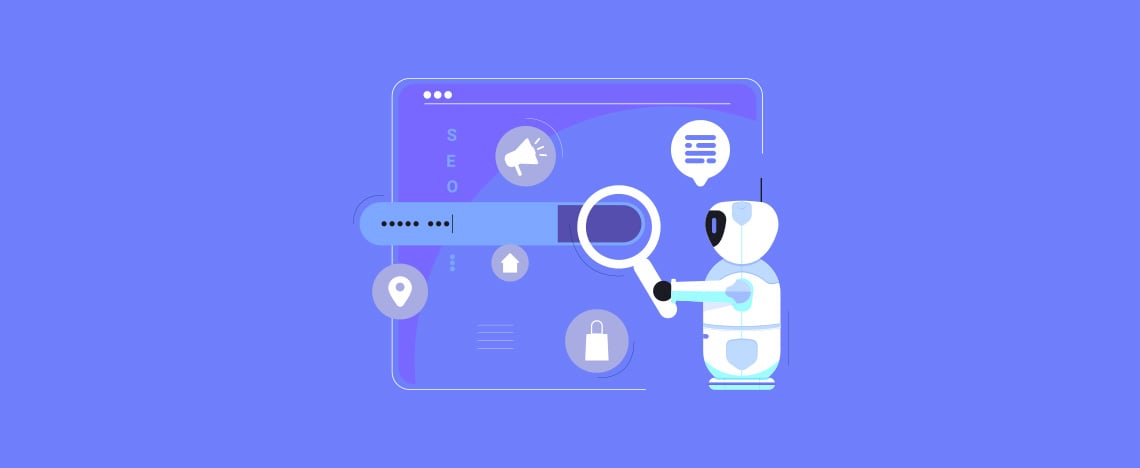
  4. Lather, rinse, repeat. One blog isn't going to drive thousands of visitors to your keyword rich page. Do it repeatedly, but keep it subtle. Don't try the same (some might say stupid) tactic that we used for this blog every time. Move your keywords around in the title and blog, try different word order and monitor results. As you track your keywords and page views you can see what combinations work best.

Let's see how we do. I will monitor our progress in ranking on these keywords and add them to the comments periodically, so stay tuned.

How does your website stack up against your competitors?

Click here for a free report.


All Posts