Brand and Capture

Current Articles | RSS Feed RSS Feed

Inbound Marketing and the Dawn of the New Digital Age


On NBC Nightly News this week, anchor Brian Williams made an announcement that is destined to be remembered as a pivotal moment in communication history. For the first time on Amazon.com, digital books outsold paper books.

the new digital age and the rise of inbound marketingCommunication has been in flux ever since the Internet became widely available. Newspaper and magazine subscriptions began dropping when consumers found they could get the same news sooner and free on the Internet. Email and online bill payment have forced the U.S. Postal Service into crisis. Mainstream TV is faltering, many believe fatally, done in by the relentless, rejected stream of TV advertising and the popularity of Tivo and Hulu as alternatives. Radio remains popular but is limited by our inability to share information in real time. Telephones are becoming "smart phones" that enable all forms of digital communication.

Social Media - The New TV/Radio/Phone

The Internet is changing the way we communicate with each other and the world around us, but change might have been a bit more gradual if not for social media, particularly Facebook and Twitter.

Facebook has single-handedly bridged the computer generation gap, turning computer-phobic grandmothers into Internet divas. Just this week Facebook passed the 500 million user milestone and shows no signs of slowing down. More than any prior Internet application, Facebook has popularized personal computer communication, stripped it of its mystery and made it an integral part of our daily lives. We are now seeing a new "space race" between Internet giants Google and Facebook to capture our attention in all digital media and provide us with new tools for communication and collaboration.

Twitter adds speed to the mix. The immediacy of Twitter has moved communication from plodding to light speed and, in the process, fast-forwarded our expectations. Today's consumer expects instant response. Businesses that can't accommodate that need for speed will be left choking in the dust, trampled by the thundering herd of new tech-savvy business owners who are ready, able and willing to embrace cyber communication.

Location-based services, such as Foursquare and Gowalla, keep us in touch with each other by literally following us through our daily lives.

While communication experts have been predicting the death or dramatic reinvention of many of our traditional communication institutions -- newspapers, magazines, commercial television, book publishing, libraries, movie industry -- the first concrete indication that the future is now occurred this week when Amazon's digital book sales kicked dust over the dust jackets of their paper forbearers.

The Emergence of the Inbound Marketing Agency

So what does this mean for business owners trying to market their products and services to consumers? It means that the traditional outbound marketing techniques used to generate leads and drive sales are out and inbound marketing techniques that focus on social media communication platforms are in. Early adopters will gain a competitive edge and johnny-come-latelies will struggle. Traditional ad agencies are morphing themselves into interactive agencies and are forced to compete with smaller, more flexible inbound marketing specialists. It will be interesting to see how businesses adapt to this changing marketing landscape.

The new digital age for business is here. What's your strategy?

Photo credit: darkmatter.


5 Steps to Identify Your Branding Strengths and Weaknesses


When was the last time you drafted your branding strategies' strengths and weaknesses chart?

1.  Start by simply identifying the services that you provide and which services you don’t provide.  Then, pinpoint the areas in which you excel and where you need improvement.

2.  Ask yourself what your brand represents today.  Come up with a list of adjectives.  Do these adjectives fit into your original mission statement and brand strategy?  Are they in accord with your day-to-day activities?

3.  Then consider, in the past year, what projects you have executed most effectively as well as what types of clients or customers are most drawn to you.  Notice any commonalities or patterns.

Remember, this is an internal audit.  Understanding your strengths and weaknesses is a way to see where and how your company and brand strategy can improve.  This is a tool that leads to the final product of a more specific, powerful and polished brand image.  

4. Determine where your brand is heading.  After looking at your present branding strategies and how they square up to your goals or the original vision of your brand, you might notice some disconnects or inconsistencies.  These should now command the primary attention of your brand strategy.  If they are positive changes that you want to pursue as the future of your brand - great!  If they are weaknesses or unfulfilled promises, consider how your brand can change course.

Focus on Brand Strategy5.  Bring the internal audit into focus.  Ask yourself:  

•    Is my client base expanding or contracting?  
•    Do my clients adequately represent the types of clients I want to pursue?
•    Have I gained on or lost to my closest competitors recently? (key accounts, revenue, market share, etc.)
•    Do people understand my brand?   

Now, take some time to reevaluate.  Regroup with your team and your ad agency and begin redrafting your brand strategy.   You’ll soon find the effort worth the time.


To Become a Marketing Designer Superhero, You Must "Know the Box"


What has always intrigued me about marketing and design is its ability and power to move and create emotion in the human mind. The most challenging part as a designer is the process through which we obtain our superhero power in order to make that next marketing campaign a success.

become a marketing designer superheroHere are four quick steps which can help designers break out of their set views in order to reach super powers when designing that next marketing campaign:

Step 1. Understanding the box
Although many people identify a 'eureka' moment when they make the conceptual breakthrough, it has to be based on solid groundwork and a detailed understanding of the ultimate goal of the marketing campaign. Luck helps but I like to live by the old saying of "the more you practice, the luckier you get."

Step 2. Knowing the box
How often have you been told to 'think outside the box?' I don't know about you but I find that very hard to do. It's as helpful as saying, 'now come up with a great idea.' So my approach involves 'Knowing the box.'

Identify all the constraints and limits you can. Within most marketing firms you will have a team of people to help you with this. Recognize those constraints and harness them for they will provide you with a healthy starting point on the initial design and feel for the branding of the campaign.

Step 3. Transforming the box
Look at all the constraints and pretend you could reverse or ignore them. Before you start to sketch out or get on the computer to design anything, conduct a quick brainstorming session with your marketing campaign team which follows these rules.

Rule 1: Criticism is ruled out.
This does not mean that criticism is banned altogether in the creative problem solving process. It simply means that criticism is suspended during the idea production stage of the process. Creative thinking simply cannot occur very effectively at the same time.

Rule 2: Freewheeling is welcomed.
The crazier the ideas the better. Off-beat, impractical, silly ideas may trigger a practical breakthrough idea that might not otherwise occur.

Rule 3: Quantity is wanted.
This rule is supported by data indicating that the greater the number of ideas produced, the greater the likelihood of useful, original ideas.

Rule 4: Combination and improvement are sought.
Hitchhike onto other ideas to turn them into better or different ideas. Two or more ideas can be combined into one great idea.

Step 4. Caution in evaluation
Once you have brainstormed these new ideas, do not evaluate them too early. Many people will be delighted to say 'It won’t work' or 'we tried that before.' The danger is that such negativity crushes the great idea that is emerging.

I believe in evaluation, especially at early stages in the design. But sometimes it helps to take the ‘crazy idea’ a bit further before exposing it to the harsh light of reality.

So there it is... follow these 4 steps and you will be well on your way to superhero designer stardom. Heck, you may make the front page of the newspaper or better yet, someone might even make a cake out of your super design.


Advertising Agency Cleveland - What's Up With This Title?


OK, it's simple. You want to rank on certain keywords, put them in your blog or page title. In our case, we want to improve our Google ranking on the phrase "advertising agency cleveland". As of this writing, we are ranked #87, which isn't great. We have lots of competition, but how can we do better?

How to improve our ranking on Advertising Agency Cleveland

  1. advertising agency clevelandYes, it's cheesy to put the keywords in the title without some kind of context. Yes, Google will actually penalize you if you don't follow-up with an article related to those keywords. So write a clever article about the subject and include your keywords in headings (see above) and image "alt" tags (see image).
  2. Be realistic - do your keywords actually describe what you do? Yes, we are an advertising agency based in the Cleveland, OH area. Check.
  3. Be realistic - do you have any hope of ranking on your keywords? OK, we're starting at 87, so there is hope. If we tried to rank on "advertising agency" alone, forget about it. The cool thing is, as we start to improve our ranking on the long-tail keywords "advertising agency cleveland", we also improve our chances with "advertising agency". Maybe someday...



  4. Lather, rinse, repeat. One blog isn't going to drive thousands of visitors to your keyword rich page. Do it repeatedly, but keep it subtle. Don't try the same (some might say stupid) tactic that we used for this blog every time. Move your keywords around in the title and blog, try different word order and monitor results. As you track your keywords and page views you can see what combinations work best.

Let's see how we do. I will monitor our progress in ranking on these keywords and add them to the comments periodically, so stay tuned.

How does your website stack up against your competitors?

Click here for a free report.


Website Redesign? Or Are You Hopelessly Devoted to Your Old Flame?


As a graphic designer, we all strive to provide our clients with the most effective and up-to-date website designs, but, over time, there is a need to come back and look at how we can change the elements, content and design to keep our clients’ online image from becoming stale.

dude, time for a website makeoverClients typically become attached to their current design (“if it’s not broke, don’t fix it”) and fail to grasp the importance of the benefits of a website re-design. It may look great to the client, but to the reader it may be overlooked when they revisit because everything looks the same as it did last year. Think of the website like an article of clothing. After a year it could be that your site looks like it is wearing the web design equivalent of a pair of legwarmers and stone washed jeans, i.e. completely out-of-date.

If you’re thinking about a re-design of your existing website, here are some questions to ask yourself:

  • Does the site do what I originally wanted it to do? And do I still want it to do that?
  • Has the audience for the site changed?
  • Does the site pass accessibility and usability checks at the W3.org site?
  • Do I still like the look?
  • Do I need a new logo?
  • Has my site that started with 3 pages become a large multi-tiered navigation site?
  • Do I need help maintaining it?

The answers to these questions can help you determine if your site needs a small update or a complete overhaul. If you designed your site just a few years ago, you may not have had the opportunity (or cash) to set up your site using a Content Management System (CMS). However, advances in technology and the evolution of off-the-shelf CMS products make it much more affordable for anyone to use today.

Here are four tips to keep in mind when planning your re-design.

  1. Simplicity = Good.
    Both in terms of functionality and design, it’s hard to go wrong with a clean and simple site that is easy to navigate.
  2. Know your audience.
    Use applications such as Google Analytics on your existing site to see where your visitors are coming from, what browsers they are using and where they go on your site. This can help you figure out exactly what they want.
  3. Build your brand.
    What are you telling your visitors about yourself? If the visitor can’t figure out what your site is about as soon as they land on the page, there is a strong chance you’ll lose them. People are always looking for something new when they log on. It visually tells the reader that the site is up-to-date, current, and that your company is still doing well enough for you to provide new information and/or products. Old, stagnant, and out-of-date sites say to the reader your company might not even still be in business.
  4. Improve functionality.
    It’s OK to try something different but don’t confuse or annoy users by creating a website that is so off-the-wall that it’s unusable. Stay within your brand, but freshen up the look to current design trends.

Moral of the story: Keep your site current but also make sure the design says, "Hey, were still in business, going strong, and looking to the future!"

It’s amazing what a simple website re-design can do for a company's image and business!

Want a free website design assessment? Click here to get your free report.


Blending Brand Marketing and Inbound Marketing


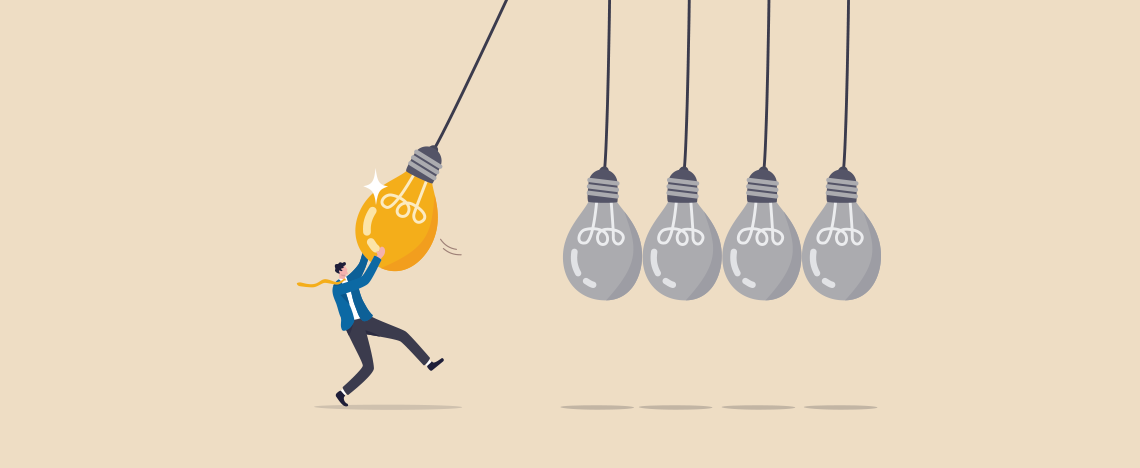
Inbound marketing is rapidly gaining popularity as a relatively inexpensive means to improve lead conversion rates and increase sales. Faced with marketing budget decisions for next year, many business owners wonder whether or not to completely replace traditional brand marketing methods with blogs, social media and search engine optimization. In many cases it makes sense to blend inbound and outbound marketing, when the strengths of one support the weaknesses of the other. Here are some examples.

Example 1 – Entering a New Market

blending inbound marketing with advertising and marketingLet’s say you’ve recently committed to an inbound marketing campaign with the business goal of improving web traffic by 200% and sales by 20%. You’re focusing your campaign on several counties, some of which are suburban, while others are more rural. The question is how will local residents find your blog and social media presence in the first place? Currently, if people search for local businesses in your market, your site isn’t listed. That’s one of the objectives of the inbound marketing campaign. How do you get them to follow you on Twitter and Facebook if they can’t find your site? Try some good old-fashioned brand marketing. Place some attractive billboards around the counties at key intersections announcing a promotional offer and direct people to a well-designed landing page to capture leads and announce your blogs and social networking venues. Try a short radio spot with the same pitch. E-mail your announcement to your current contact list and let them know about your new site, blog and community spirit.

Example 2 – Rolling Out a New Product or Service

Advertising is still one of the best ways to get peoples’ attention. Over time consumers grow weary of the same old intrusive ads blanketing the media, but for a quick impact to draw attention to a new product or service, there’s nothing like it. Get the buzz started with some clever “coming soon” ads to whet viewers’ appetites. If possible, target a special date that doesn’t conflict with some other popular event. Give people sneak previews via your web site, blog and social media – but don’t forget to capture your leads via landing pages! When the roll-out date arrives, throw a party of some kind, online or at a public place. Offer special promotions and prizes. Get them enrolled in your community sites and signed up for your RSS feeds. Reel in as many leads as possible and make sure they become loyal followers through your follow-up inbound marketing campaign.

Example 3 – Giving Back to the Community

Start by getting involved with local or national community outreach programs or charities. Offer your marketing (or other) expertise as a way of helping them reach their goals. Become a thought leader. Give free talks and webinars where you cite your own company’s efforts to get found online and capture leads. The main benefit will be helping struggling businesses and charities in your area, but you will also meet business leaders and potential clients. Word of mouth is still (and will always be) the most successful form of marketing. As you meet people and get the word out, don’t forget to invite them to join your online conversations via blogs and social media. You will start to build a strong following that trusts your judgment and is far more likely to do business with you.

How does your website stack up against your competitors?
Click here for a free report.


Are Ad Agencies Going the Way of the Dinosaur?


ad agencies are going the way of the dinosaurIt sure seems that way. A year ago a survey of CMO's revealed that 2/3 were planning to reduce their advertising budgets and move resources into digital/interactive. If anything, the economy in 2009 has made life even tougher for traditional ad agencies. What's going on here?

  1. We're evolving: Consumers are driving the marketplace, not advertising and marketing executives. We demand quality and consistency from brands, and our trust must be earned. Brands must re-tool themselves as reliable, effective, safe and economical. We don't go for fluff much anymore.
  2. Advertising has become a dirty word: It has become, literally, a necessary evil to support content on the various media. Consumers still respond to advertising when it's clever or heart-warming, but it doesn't drive them to buy like it used to. Some forms of advertising, like pop-up ads on the Web, are universally hated and drive people away from brands.
  3. The company/agency relationship has soured: As businesses of all sizes become more familiar with inbound marketing and other strategies with measurable results, they are less willing to pay monthly retainers for undefined services and poorly established goals. This trend is seen across all types of consulting. Executives want to know what you're going to do, when, and how much it's going to cost. And they want measurable ROI on top of that.
  4. We're going social, and it's not just a trend: Everybody knows how fast social networking is growing, but many (if not most) marketing executives still think this trend will fizzle eventually, and we'll be back to business as usual. Don't count on it. What's driving Web 2.0 and social networking is (again) cultural evolution. We don't want direct mail and TV ads and e-mail spam. We want discussion and tips and recommendations from real people we meet in real life and online. We will not be satisfied with going back to the old ways, even if the technologies change. Twitter and Facebook may go away someday, but something even more social will replace them.

What's your experience with ad/marketing agencies these days?

Want the scoop on Inbound Marketing? Download our free  Inbound Marketer's Handbook!


All Posts